A bride stands still while the room seems to move around her. In another photograph, dark flowers interrupt the face without hiding its expression. Two portraits, two very different rhythms—and both invite a second look.
For our first photographer spotlight, we take a closer look at the work of Sabina Mladin. This is a closer reading of the photographs: what draws the eye, how the frame holds together and what other wedding photographers can learn from looking carefully.
Meet Sabina Mladin
On her own website, Mladin describes a practice rooted in people, emotion and creativity, expressed through both vibrant colour and black and white. She identifies Arad, Romania, as her home and describes working at weddings with her partner, Adelin.
That personal emphasis is a useful starting point. Rather than trying to reduce her work to one visual recipe, look at the different ways these portraits direct attention towards a person.
A still face inside a moving frame
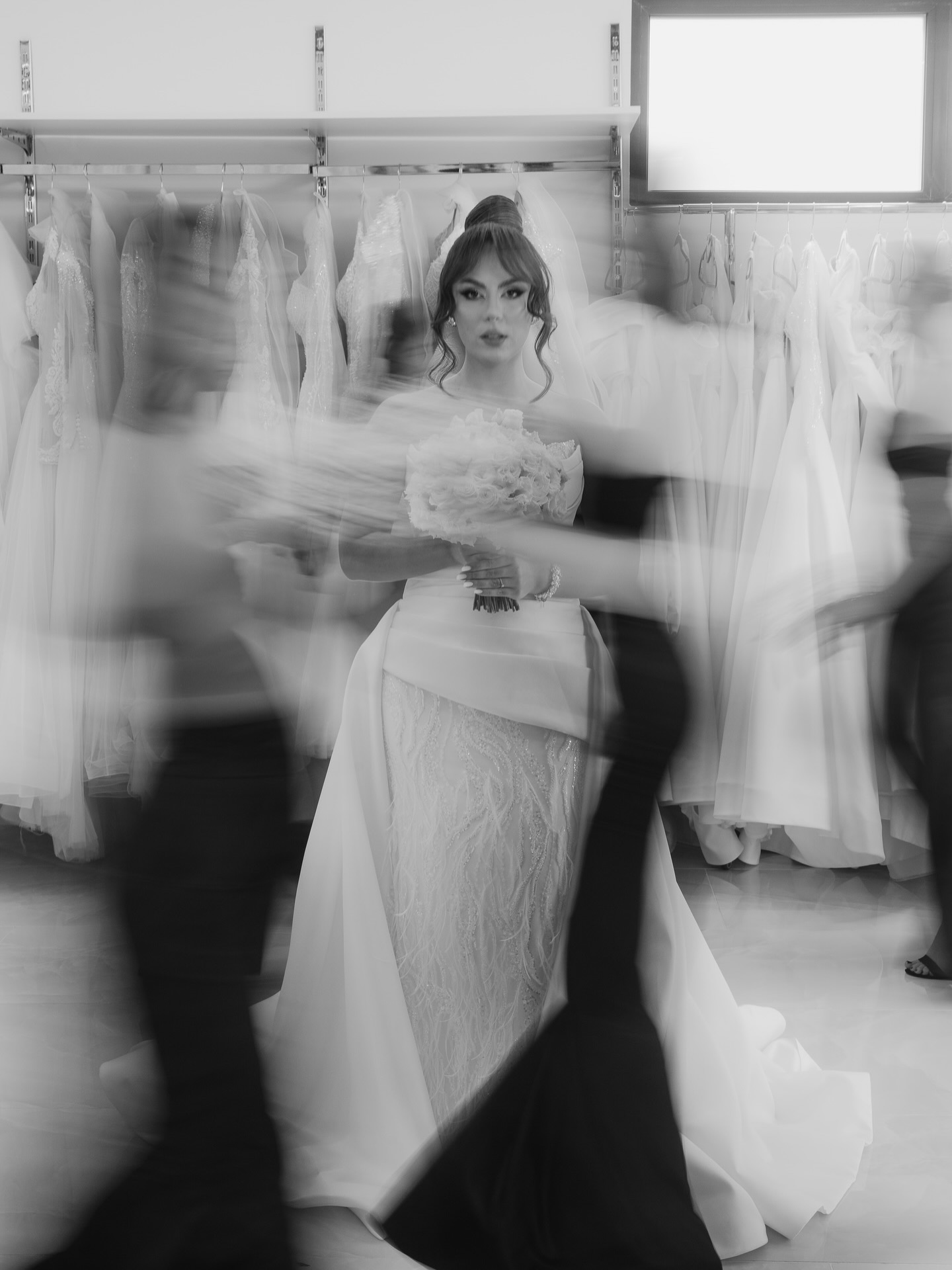
The black and white photograph above places the bride near the centre. Around her, soft, repeated shapes suggest movement. Her face gives the eye somewhere to settle; the surrounding blur makes that stillness feel more pronounced.
The appeal comes from the relationship between the two. Without a clear point of attention, the blur could overwhelm the picture. Here, the recognisable figure holds the composition together while the edges become less certain.
We do not have a behind-the-scenes account or exposure data for this image, so we are not assigning a particular camera setting or technique to it. The visible lesson is compositional: an unconventional effect becomes easier to read when the photograph still gives us a strong anchor.
Flowers that shape the portrait
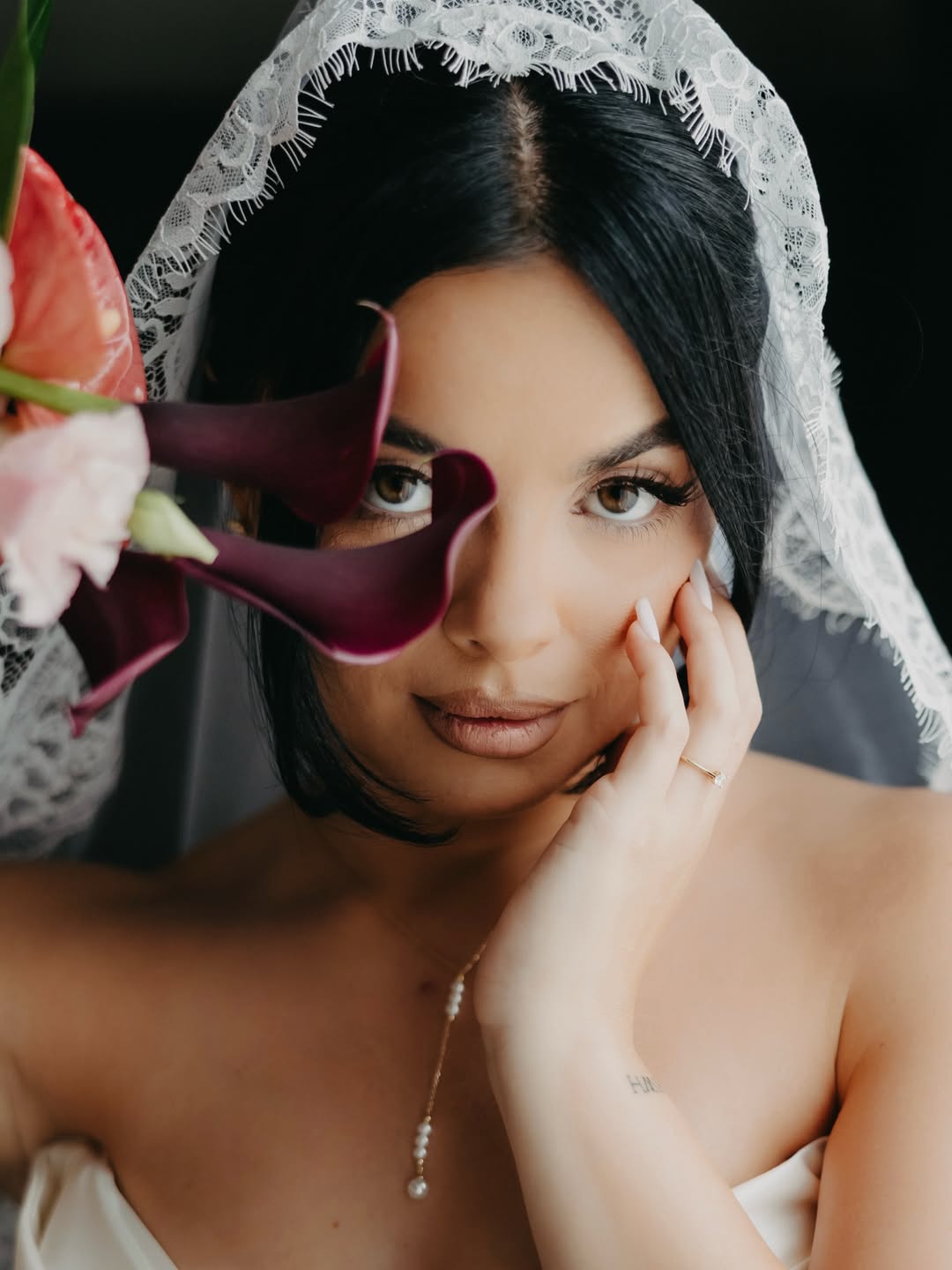
In the colour close-up, curved dark flowers enter from the left and overlap part of the bride’s face. The lace veil frames her hair, while the hand against her cheek adds another gentle curve. The image feels close and deliberate without needing a complicated background.
Notice how much the flowers do. They introduce colour, create depth and change the route the eye takes across the face. A bouquet does not have to sit at waist height to belong in a bridal portrait. A familiar wedding detail can become part of the composition itself.
That is a useful idea to explore with a willing subject: find a relationship between the flowers, a gesture and the face. Keep checking that the detail you introduce supports the person rather than swallowing the portrait.
Light that brings two people closer
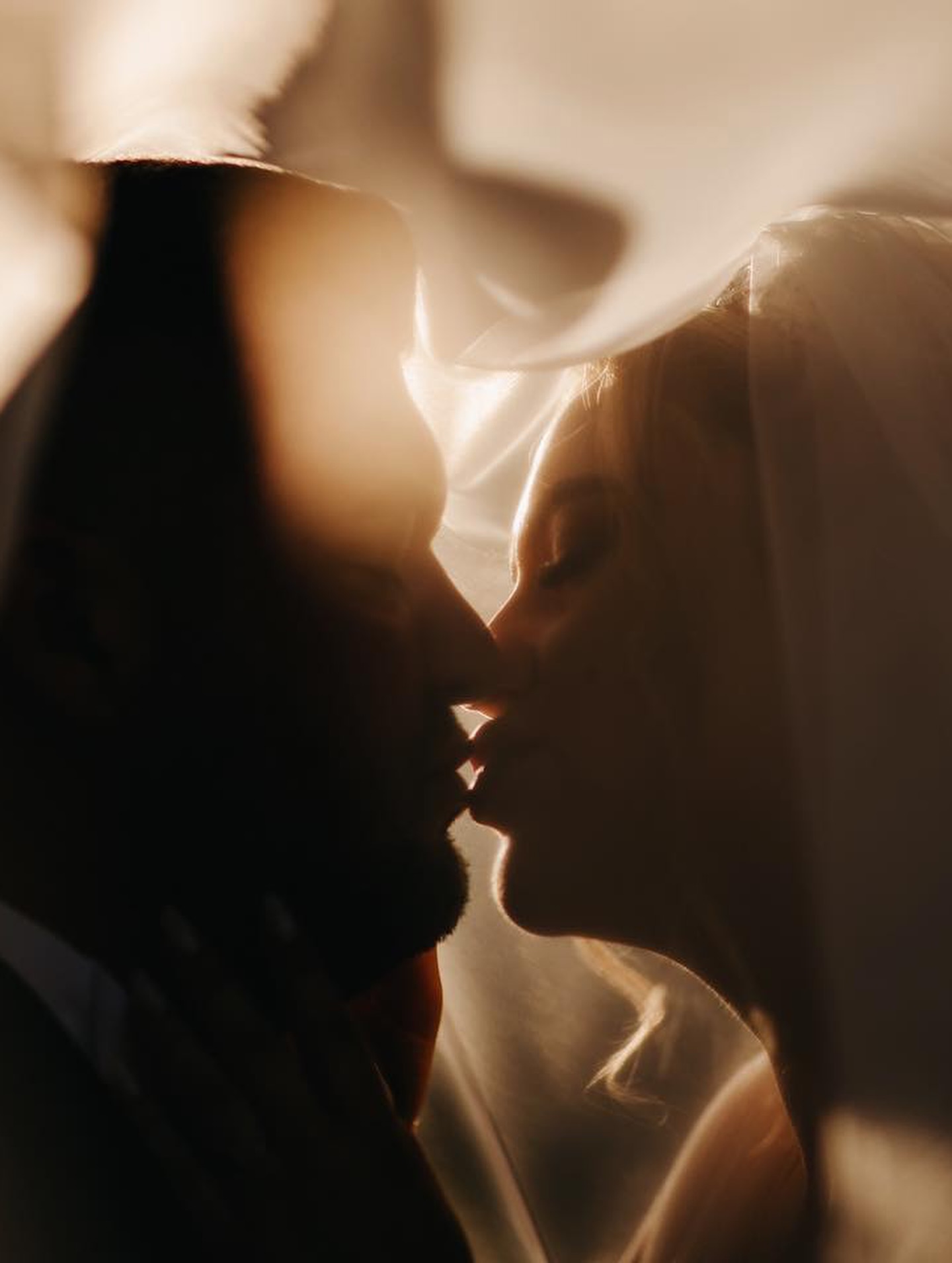
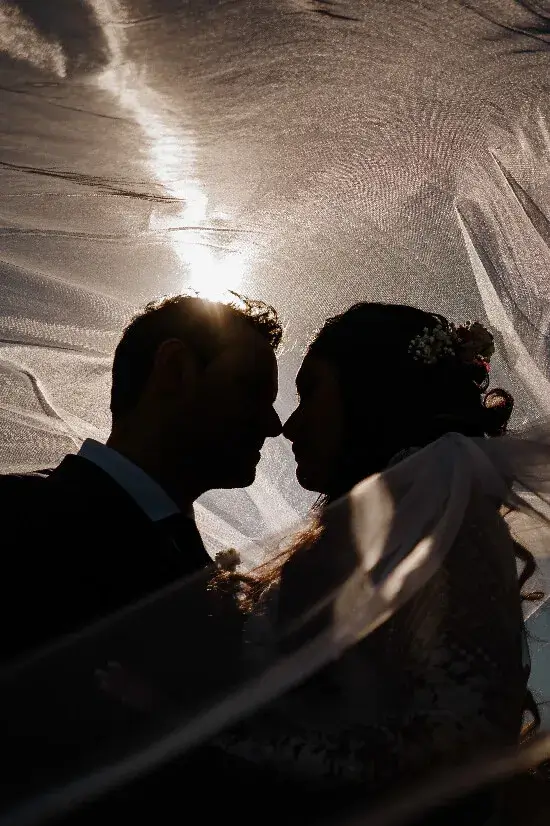
Here, the couple fill the frame. Warm light filters through the veil, softening the space around their faces while their profiles remain distinct. The fabric becomes a small world of its own, with almost nothing to distract from the kiss.
Let the shadows tell part of the story
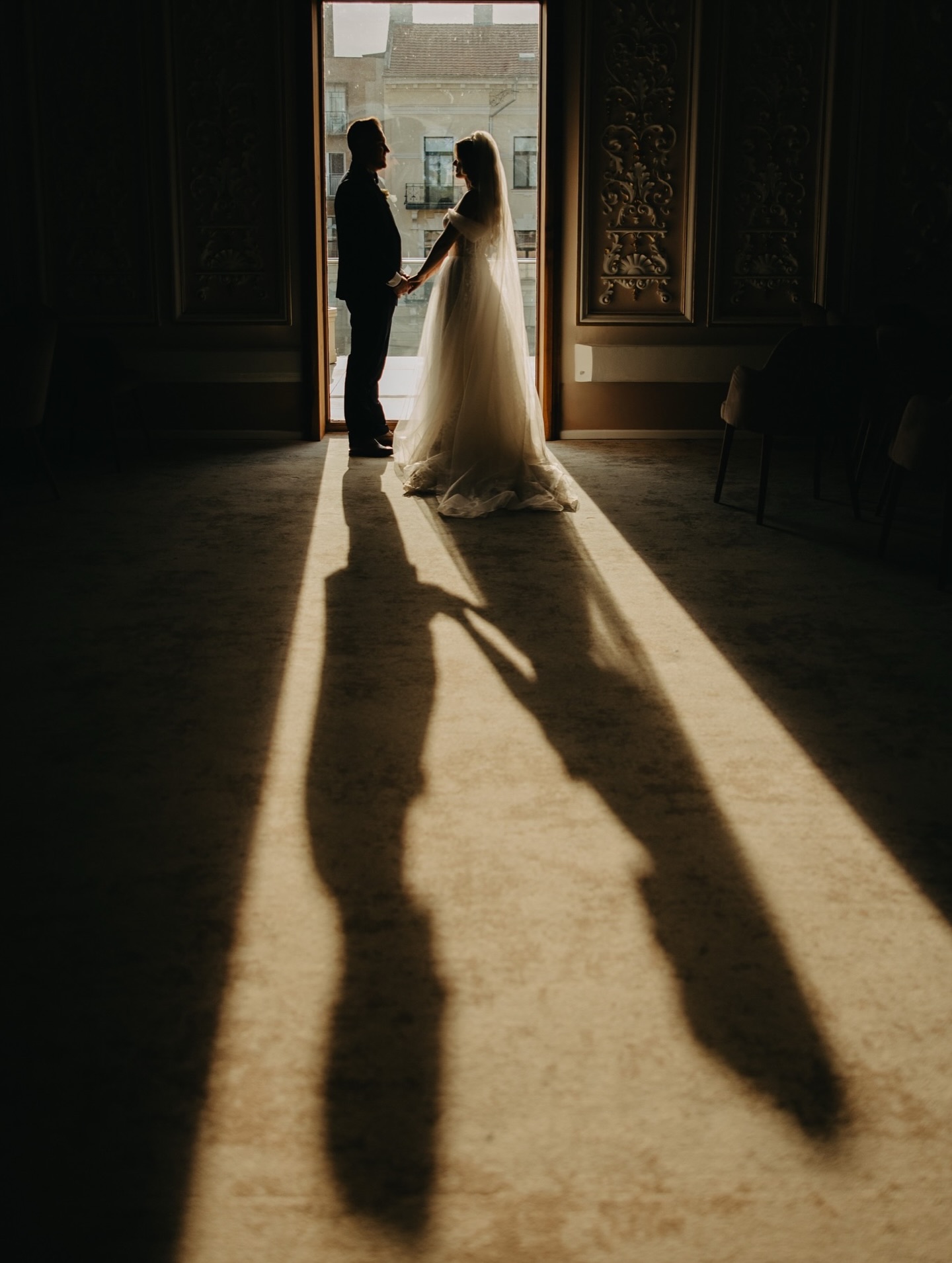
The doorway portrait takes the opposite approach: it steps back. The couple occupy a small part of the picture, but their shadows carry their presence across the floor. Light gives the room a clear direction and turns empty space into an active part of the portrait.
What photographers can take into their own work
Start with a clear question for the image. Do you want the portrait to feel calm, restless, intimate or playful? Then decide which visible element will carry that feeling. It may be movement around a still figure, a patch of colour, a foreground shape or a small gesture.
Make a simple version first. If the couple have time and want to experiment, change one element and compare the result. This keeps the creative process purposeful and makes it easier to recognise when an effect adds something—or when the simpler photograph is stronger.
For more visual approaches, explore our collections of black and white bridal portraits and creative wedding photography filters. These are separate references, not claims about the equipment used in Mladin’s photographs.
Look beyond a single standout image
A striking portrait can introduce you to a photographer. A wider body of work helps you understand their range. Visit Sabina Mladin’s portfolio, follow @sabinamladinphotographer.
Next time an image makes you stop scrolling, give it another ten seconds. Where does your eye land first? What brings it back? Those small observations are where inspiration starts becoming something you can use.
Photography: Sabina Mladin. Visual commentary by Weddinspiration; this article is not an interview.