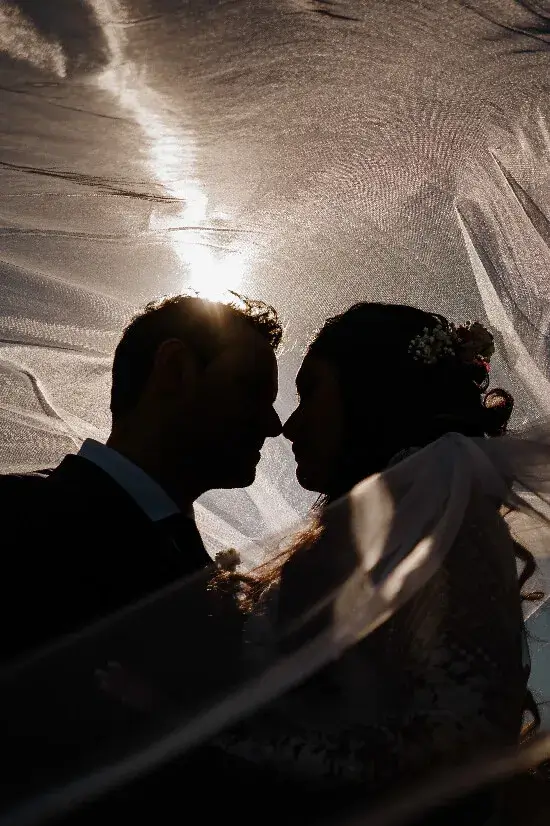
The veil moves. A strand of hair escapes. The carefully arranged skirt develops an opinion of its own. Windy wedding photos can feel wonderfully alive, but the nicest result is rarely achieved by insisting that every detail remain perfectly still.
A useful plan gives movement a place in the portraits without making your comfort depend on the weather. These photographs show three ways fabric can contribute to a composition. They are visual references for shape and flow; the same ideas can be explored in a breeze or with a gently arranged piece of fabric.
Think about shape before perfection
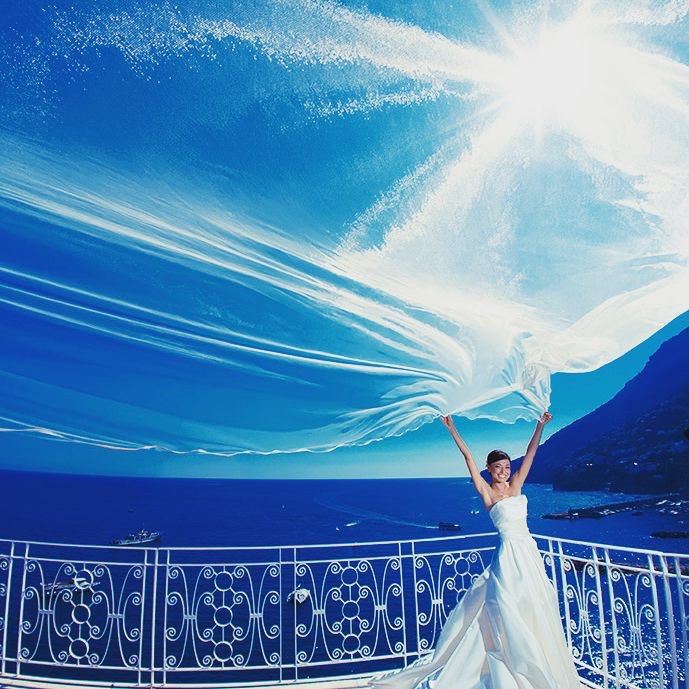
In Biagio Sollazzi’s photograph, the lifted white veil becomes a large shape against the blue surroundings. It occupies much more of the frame than the face, yet the bride remains easy to locate. The contrast between fabric and background helps the image read clearly.
For your own portraits, tell the photographer whether you like that dramatic scale or prefer something quieter. A little movement at the edge of the frame may be enough. You do not have to turn every portrait into a veil photograph simply because you are wearing one.
Let the fabric pass through the picture
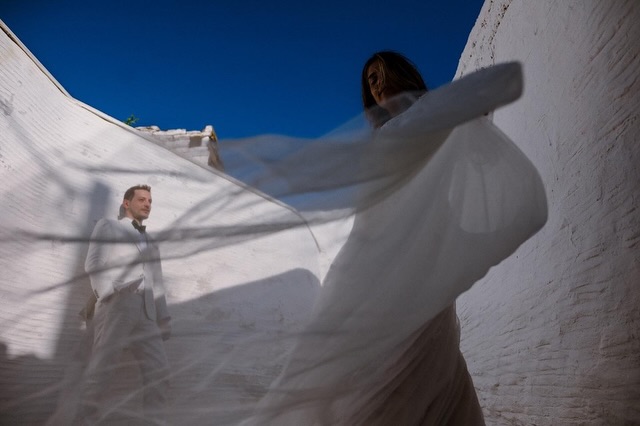
Giorgos Kouzilos’s image uses pale fabric across the foreground. The photograph feels different because we look through and around it. The fabric contributes atmosphere while the face provides the point of interest.
That balance matters on a breezy day. A veil can briefly cover a face, then reveal it again. Give the photographer a little time to watch that rhythm instead of resetting after every gust. A clear portrait can come before or after the more experimental frames, so you keep both the person and the feeling of movement.
A sheltered version can still have energy
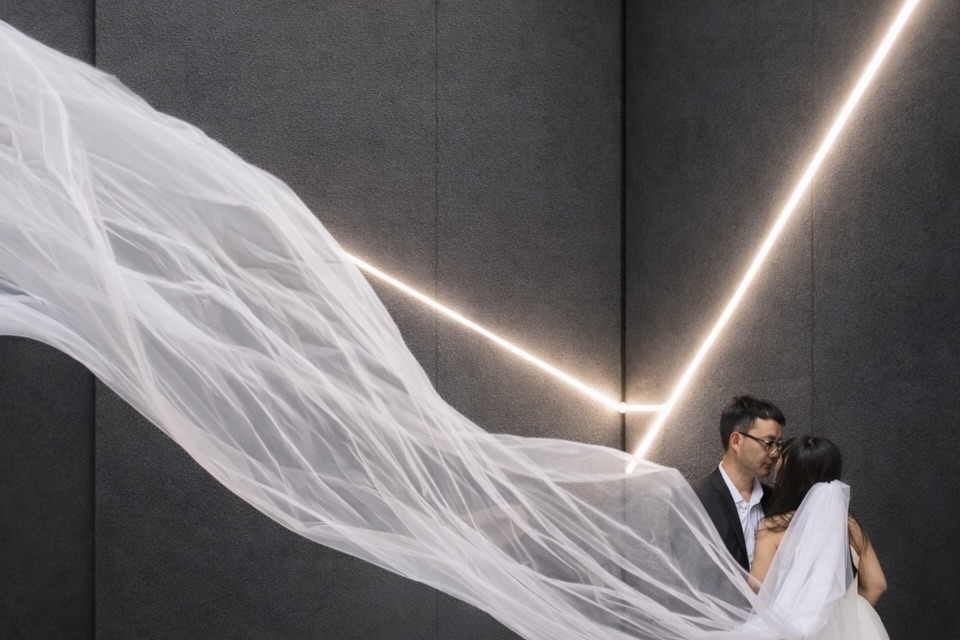
In the Paramount Photography portrait, sweeping white fabric meets a dark wall and bright geometric lines. The contrast gives the image movement even in a contained setting. An open landscape is not the only place where a veil can become expressive.
Identify a sheltered alternative with your photographer: a covered terrace, a generous doorway or an interior with enough room. If the wind becomes unpleasant, moving a few steps may protect the atmosphere of the session as much as it protects the outfit.
Make a small practical plan
Before the day, ask whoever is styling your hair or fitting the veil how it is intended to be secured and removed. Keep the necessary pins or comb with a trusted helper. Tell the photographer if the veil is borrowed, delicate or especially important to preserve, so the movement stays within your comfort level.
Choose footing you can manage in your shoes and avoid exposed edges. If conditions become unsafe or you feel cold and uncomfortable, pause or move inside. No single picture needs to decide whether the session was successful.
Build a little flexibility into the wedding photo timeline. A short break can be more useful than ten minutes spent fighting the weather. And if the breeze arrives with rain, our rainy-day photo plan can help you think through an indoor alternative.