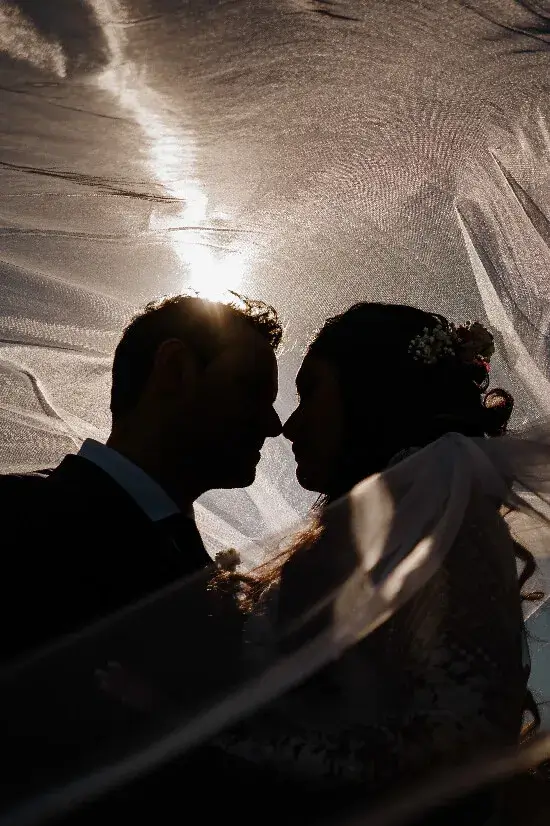
Before the photographs of the walk, the kiss and the celebration, there can be a photograph that simply belongs to her. No required expression, no proof of a perfect wedding morning. Just a person in an extraordinary set of clothes, looking like herself in a way she may not have seen before.
A bridal portrait can be quiet, theatrical, mysterious or open. The interesting question is which of those feelings seems familiar. These images offer several answers, with light and fabric doing as much storytelling as a smile.
Let the portrait take up space
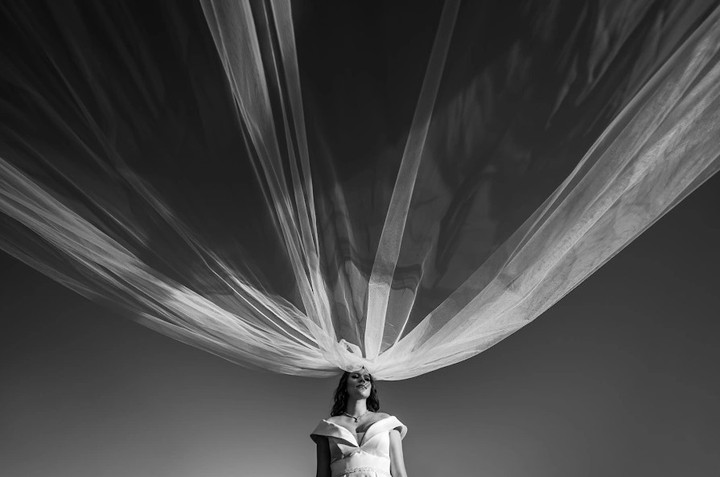
In Lupascu Photo’s image, the veil opens across the sky like an enormous pair of wings. The bride remains a small, steady point beneath all that movement. It is a portrait with room around it, proof that closeness is not only a matter of moving the camera nearer.
There is something generous about allowing a person that much space. We can look at the whole arrangement before returning to the face at its center.
A face does not have to be fully revealed
Viridian Images lets a pattern of light pick out a face from darkness. Dawid Zielinski draws another pattern across the skin with fern shadows. A familiar feature becomes something to discover: an eye, the curve of a cheek, the direction of a gaze.
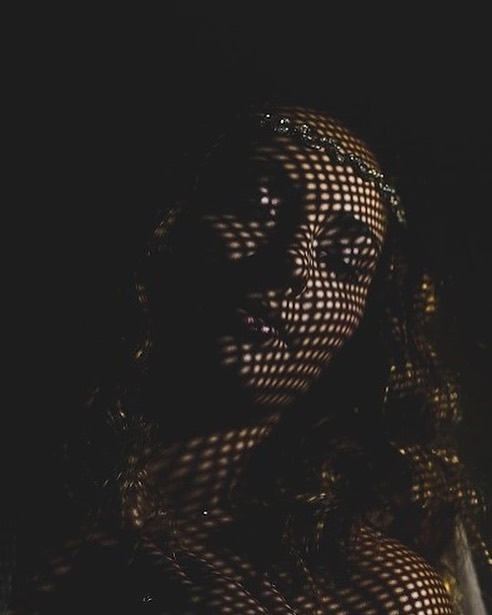
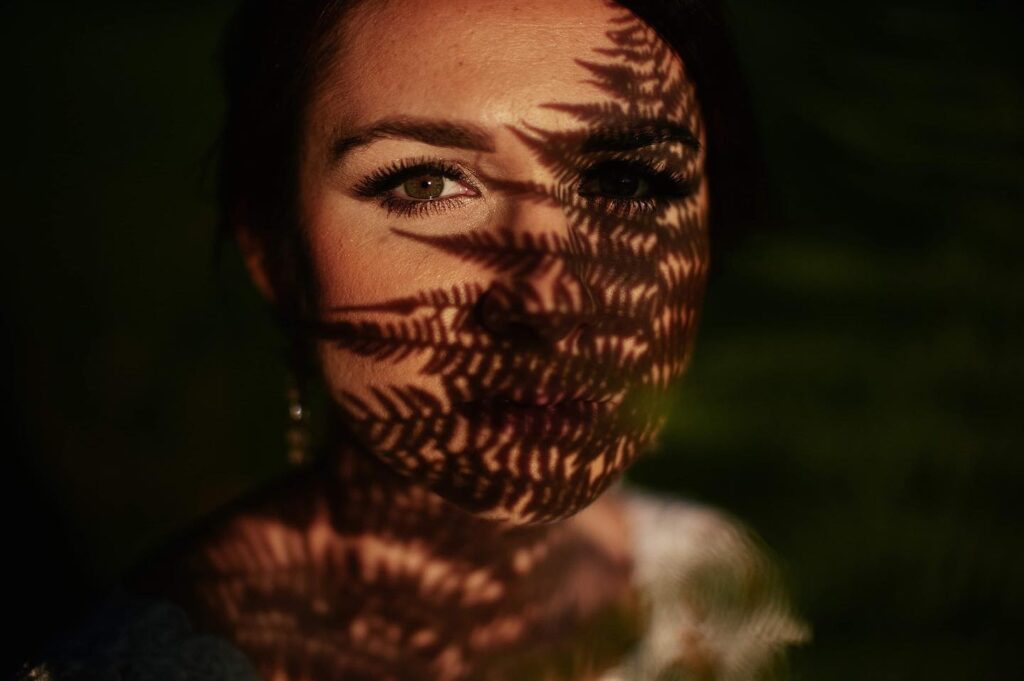
These photographs are intimate without being entirely open. They remind us that a portrait can hold a little privacy, even on a day when so many people are looking.
The veil as a changing surface
Dmytro Sobokar’s layered portrait gives fabric a dark, almost sculptural presence. In Nastynda’s close view, an edge of veil divides the picture and one visible eye holds our attention. Andrew Gubrenko lets softer folds drift around an upward-turned face.
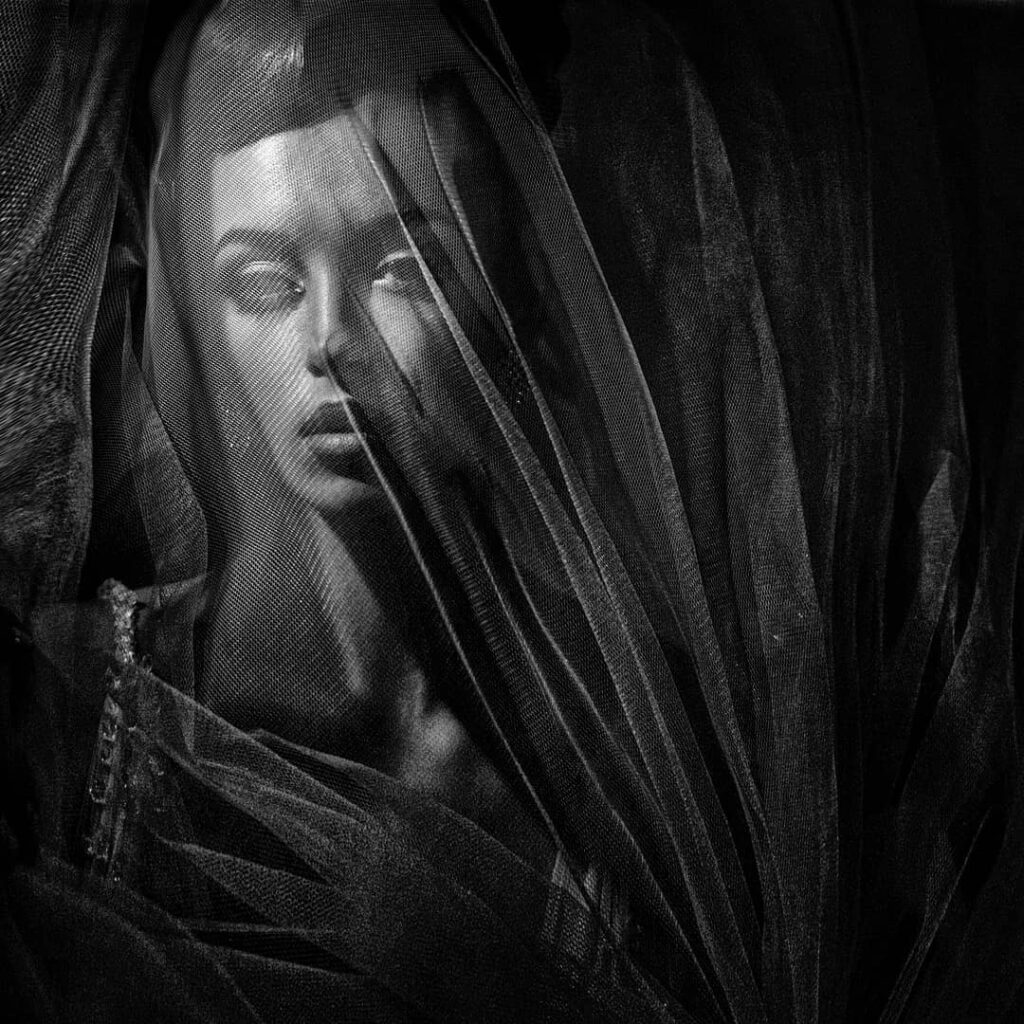
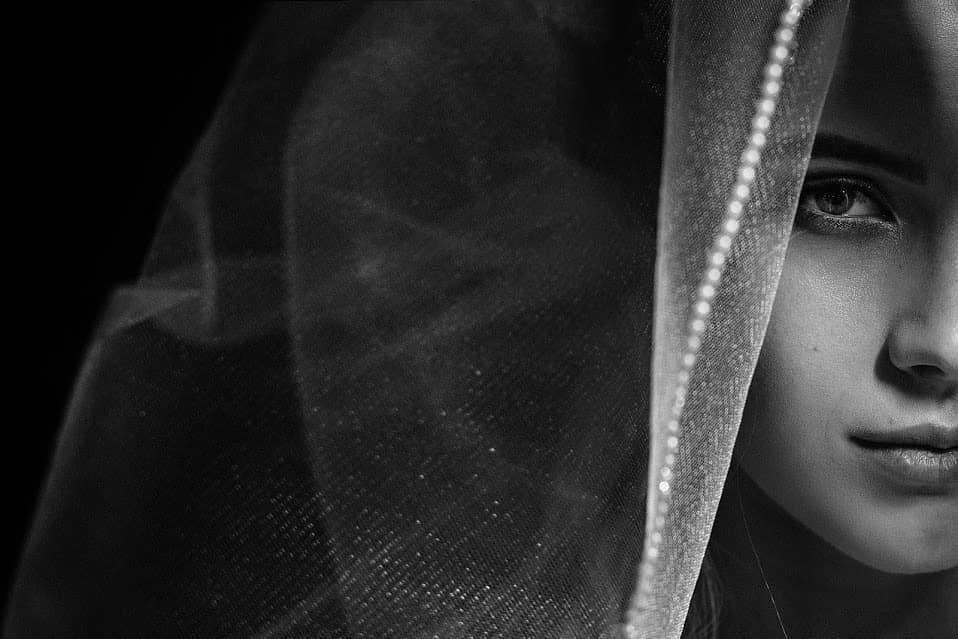
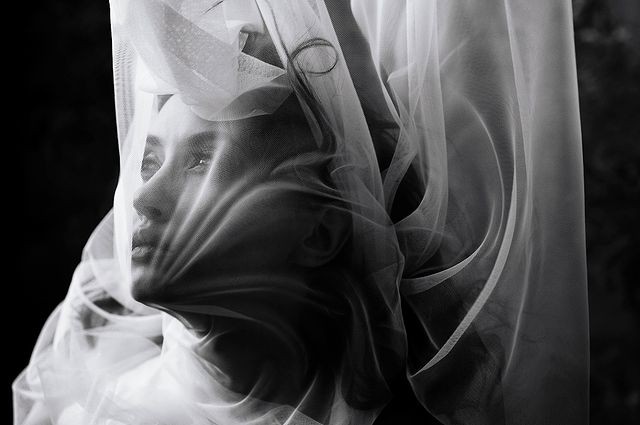
The material changes character in every image. Sometimes it conceals, sometimes it catches light, sometimes it seems to draw a line around the person. A veil becomes especially interesting when the photograph allows it to behave like fabric, with its own weight and movement.
A quiet place in the light
Pollok Pictures finds a diagonal patch of warmth on a wall. The bride occupies only part of it; the rest of the room is allowed to stay in shadow. Pasha Sokol’s profile offers another kind of calm, with the veil held away from the face against a dark background.
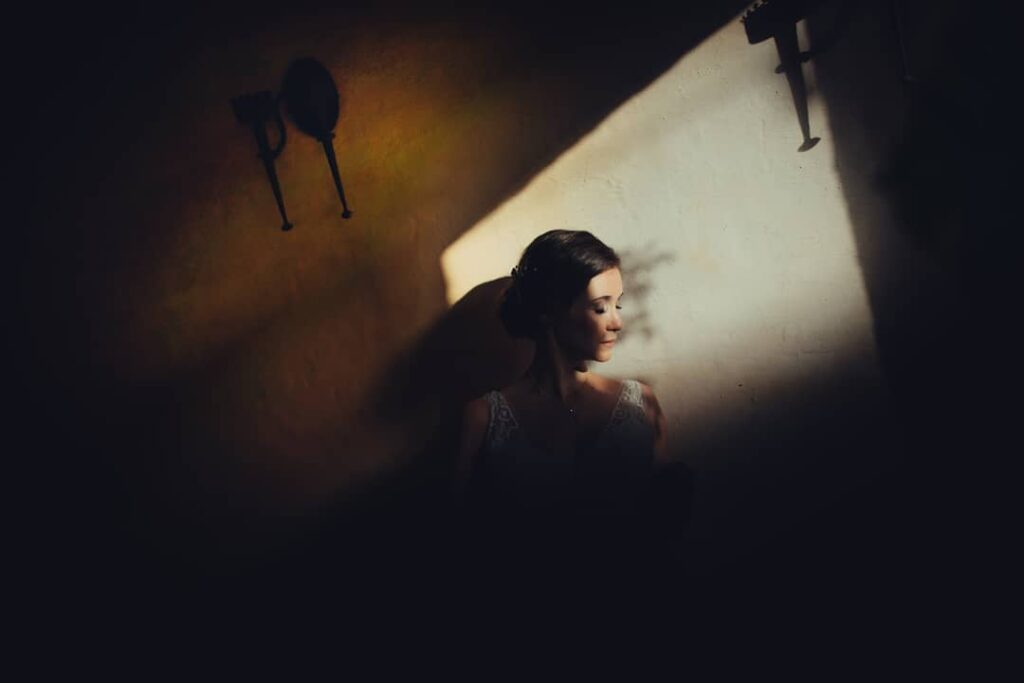
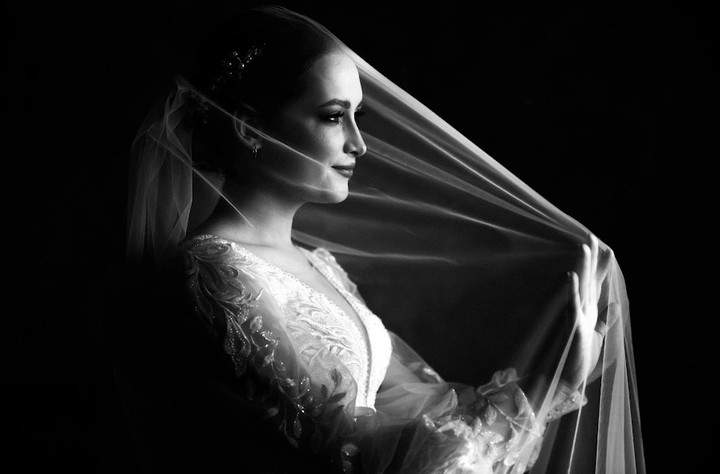
There is no need to fill the stillness. A portrait can be compelling because of a small turn of the head or the way a hand holds an edge of cloth. Those are details worth noticing before asking for another pose.
For your own photographs, choose references that feel like an invitation. Tell your photographer which moods you like and which expressions feel forced. The aim is a picture you want to keep looking at because someone recognizable is looking back.
Explore the intimacy of shadows and what monochrome makes us notice.