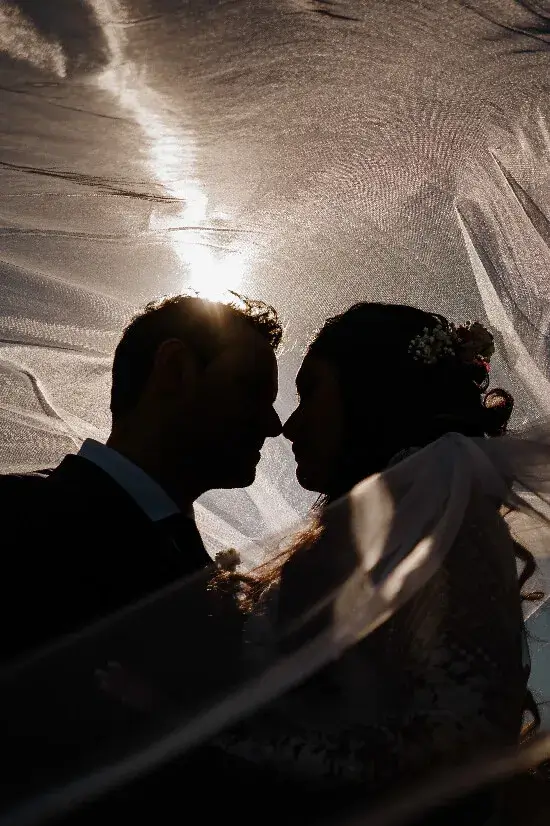
A hand reaches out. A dress catches the air. Someone crosses a bright strip of ground toward someone waiting. In black and white, these small actions can seem to occupy the whole picture.
The appeal is not simply that monochrome looks like a memory. It changes what we notice first: a line, a face, a patch of light or the distance between two people. This collection follows those invitations, from the tender to the wonderfully strange.
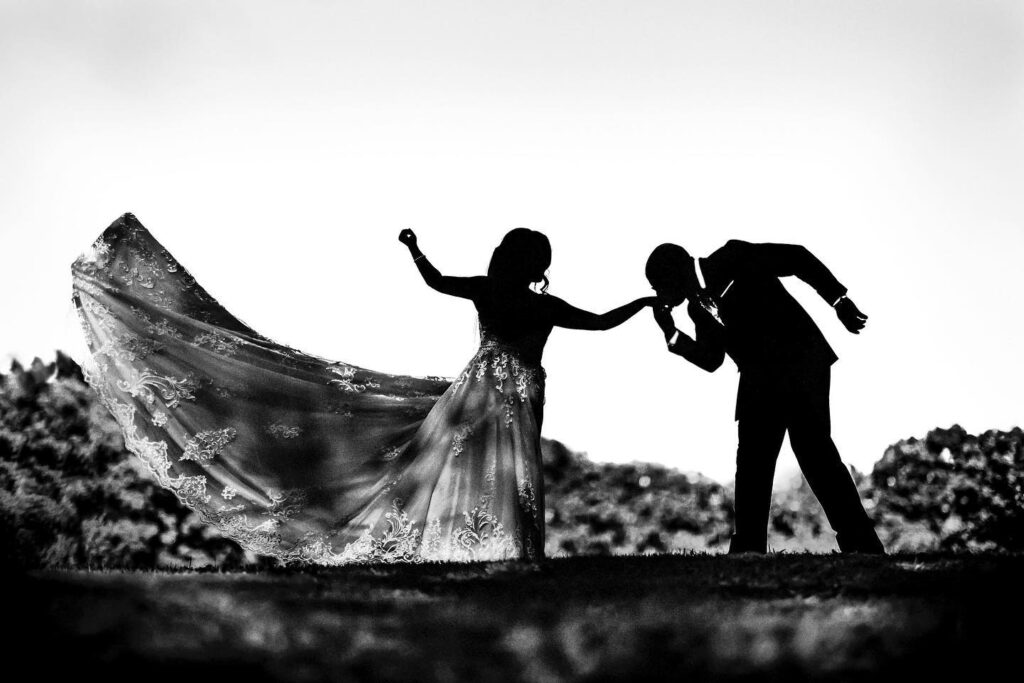
A gesture large enough to hold the frame
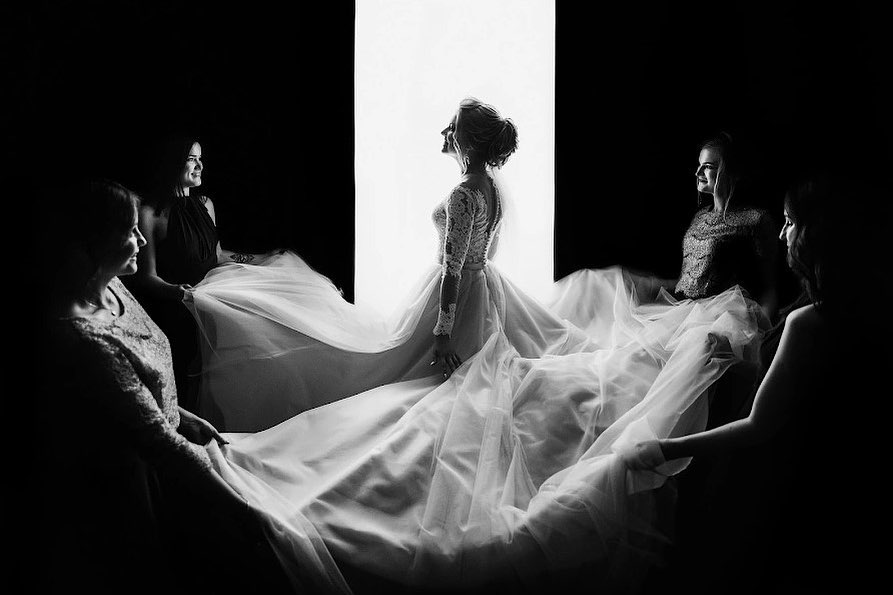
In Daniel Nydick’s silhouette, a kiss on the hand gives the photograph its center while the bride’s dress stretches outward. Lapkovsky’s window scene gathers several people around flowing fabric. One picture expands from a single gesture; the other lets a small group share the work of making the moment.
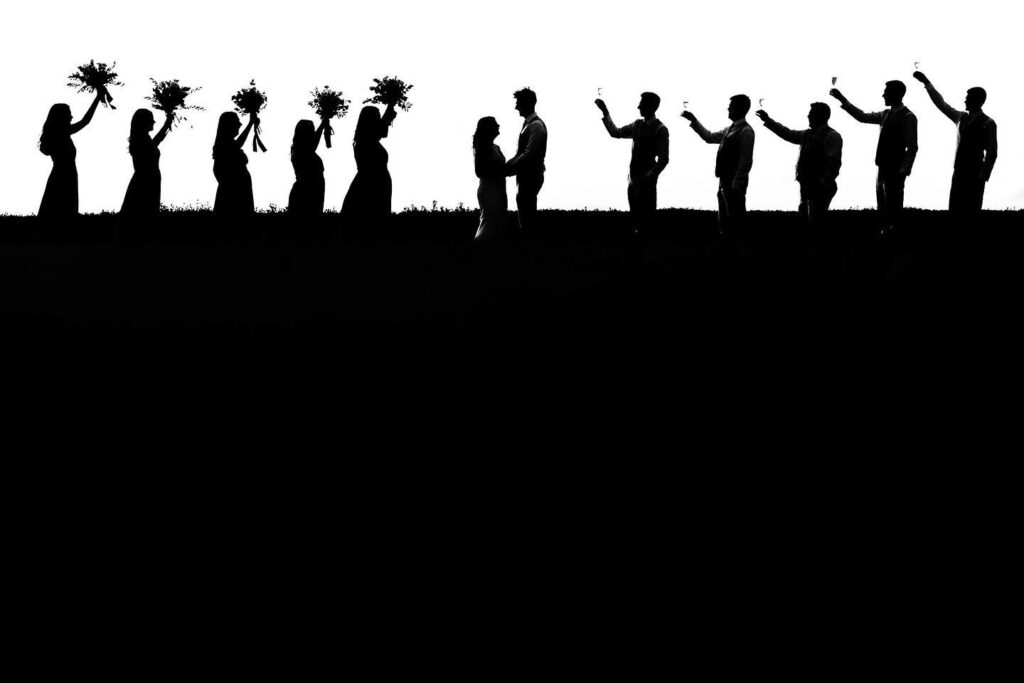
Gabriele Latrofa turns a wedding party into a clear horizontal rhythm. Arms and flowers become readable shapes, yet the different postures keep the group from feeling anonymous. There is room for individuality inside the pattern.
Let the light lead you through
PhotoFlexas places a groom on a diagonal path of light, with a bride waiting farther into the frame. The eye makes that journey with him. Sergey Shunevich brings us closer, separating two faces through light and depth rather than through a large landscape.
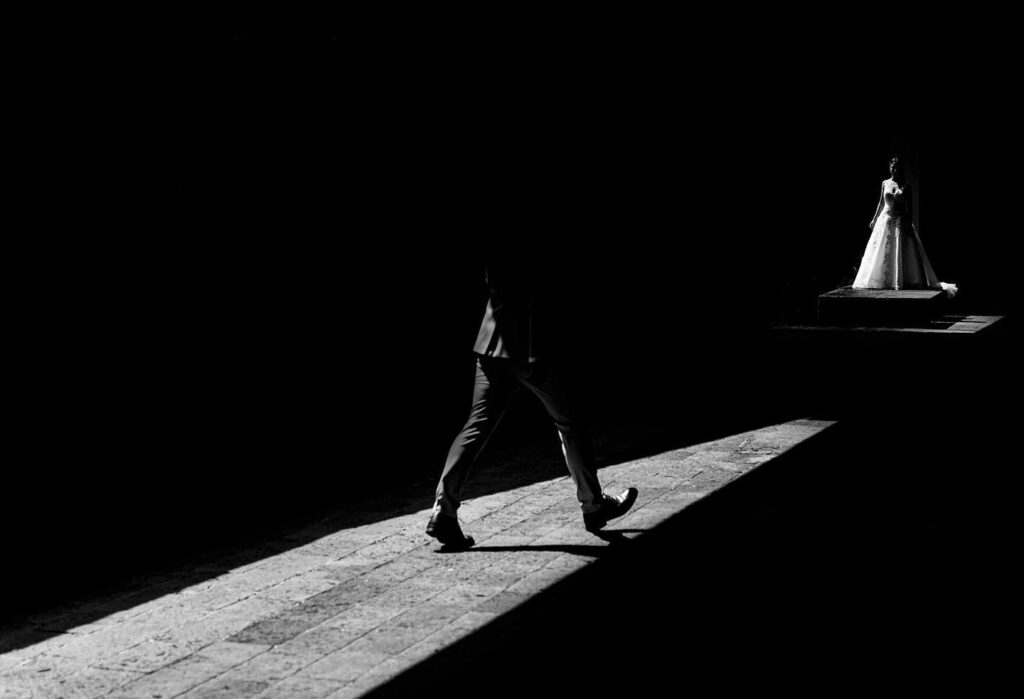
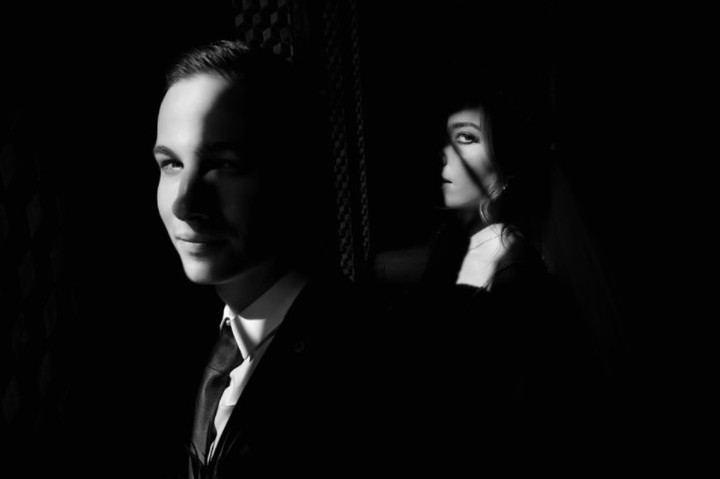
Neither image needs to explain the entire day. Each chooses one relationship between people and space, then allows the rest to recede. That selectiveness is part of what makes a photograph feel considered.
The air is part of the picture
Paolo Sicurella lets a skirt sweep across a rooftop scene. In the image by Las Fotos de Vale, the veil rises vertically and a hand reaches out beneath it. Fabric becomes a way of seeing something invisible: the movement of air, made briefly tangible.
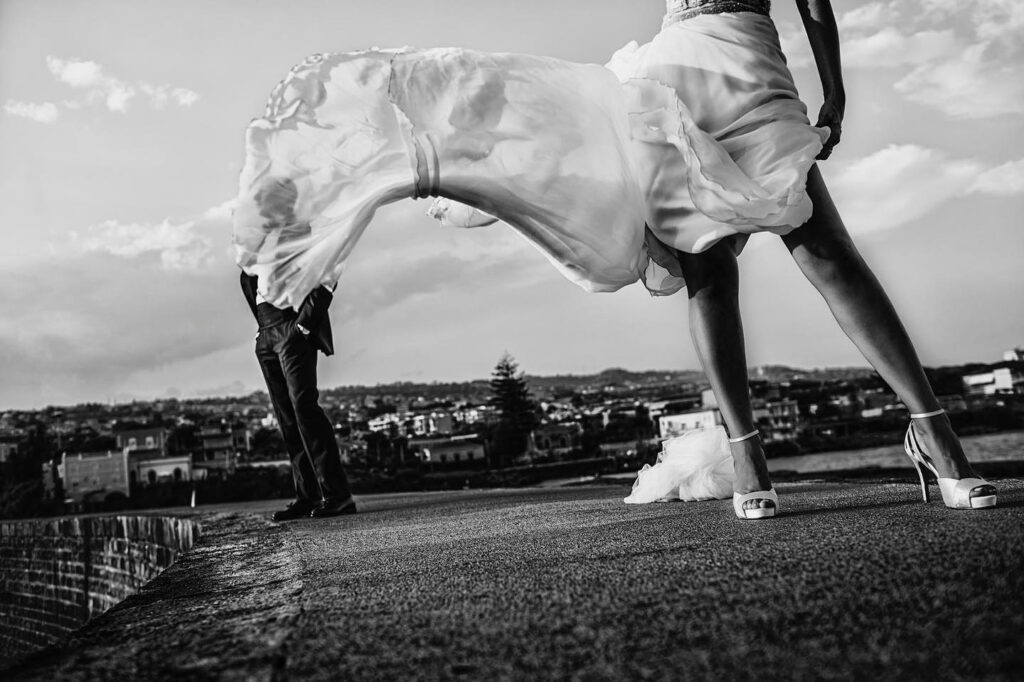
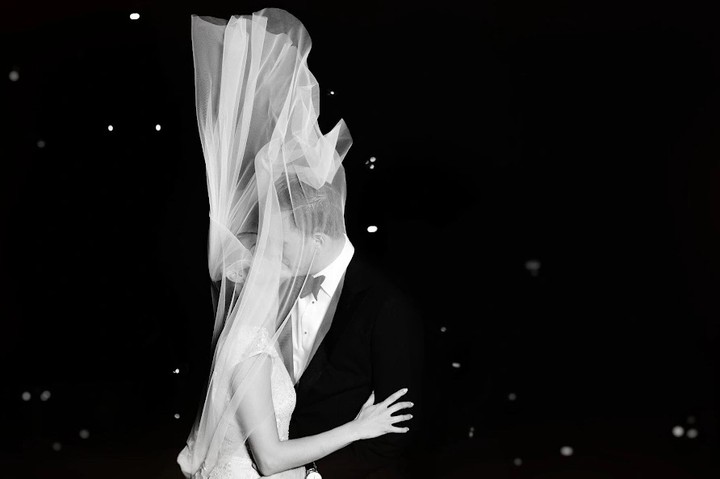
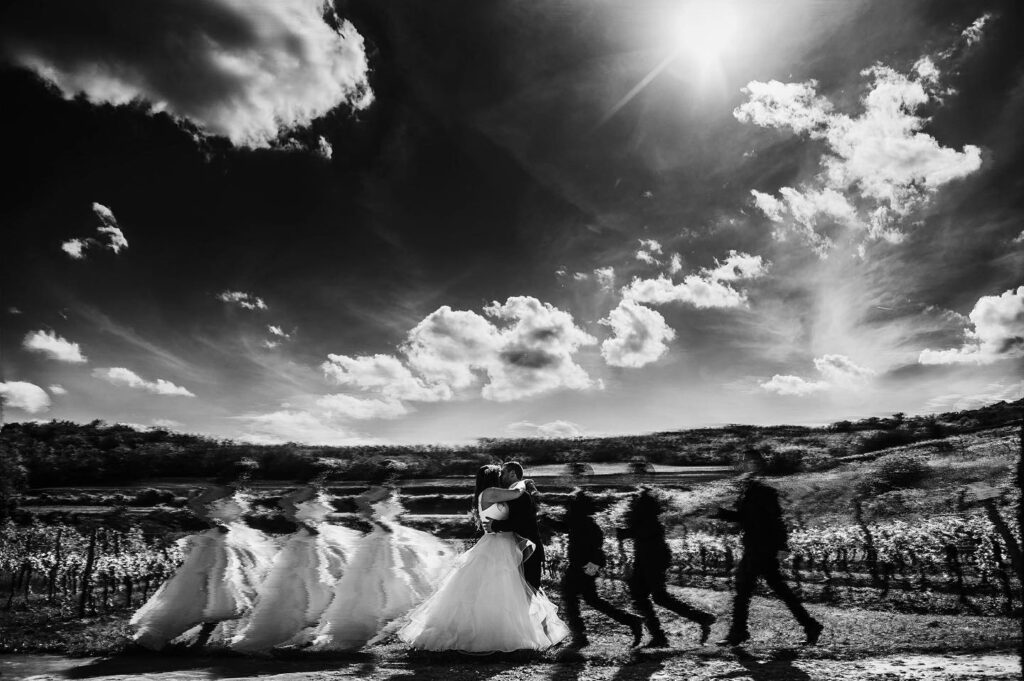
Gábor Badics adds another kind of movement through repeated figures beneath a dramatic sky. The photograph feels like a short passage of time held inside one frame. Our eyes can walk through it more than once.
Make room for visual mischief
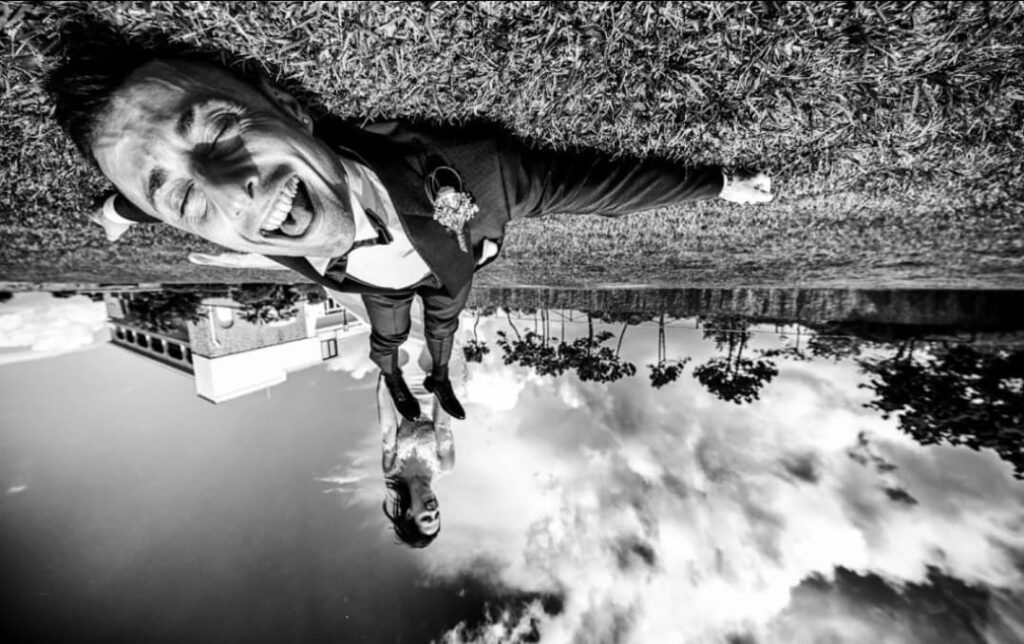
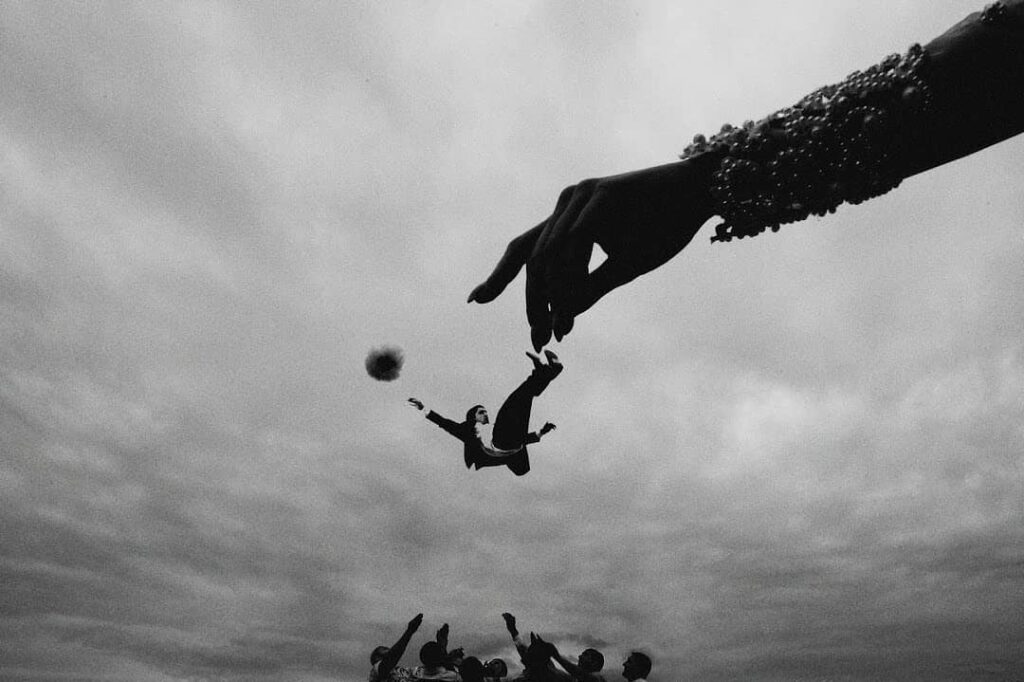
Giuseppe Genovese turns the world upside down, with a smiling face unexpectedly close to the lens. Kemran Shiraliev plays with scale, making a foreground hand appear to hold a tiny airborne bride. These pictures are reminders that black and white has an excellent sense of humor.
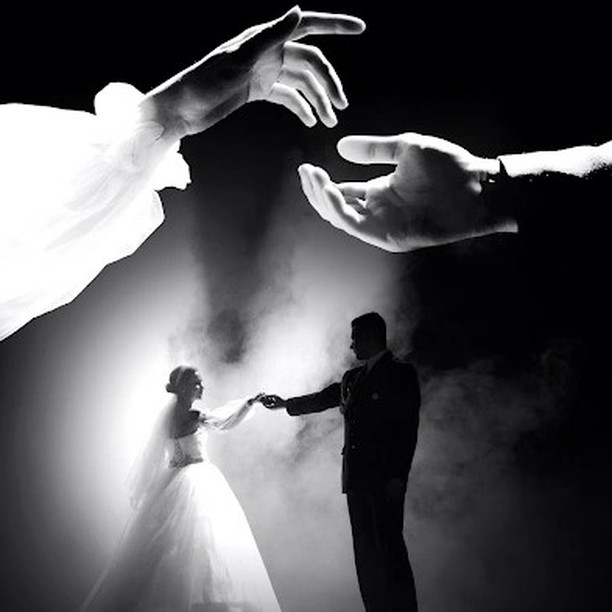
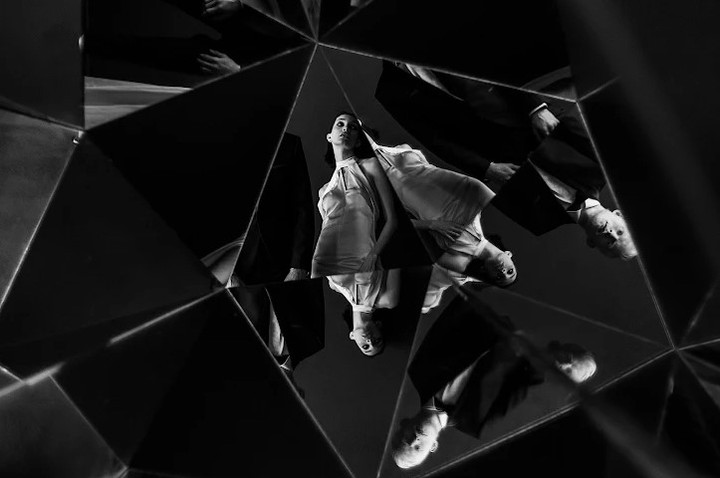
Anna Babakhina’s enlarged hands and Ashamarin’s angular reflections push familiar wedding gestures toward something more dreamlike. We recognize the people, then notice how the picture has rearranged the world around them.
End with a little atmosphere
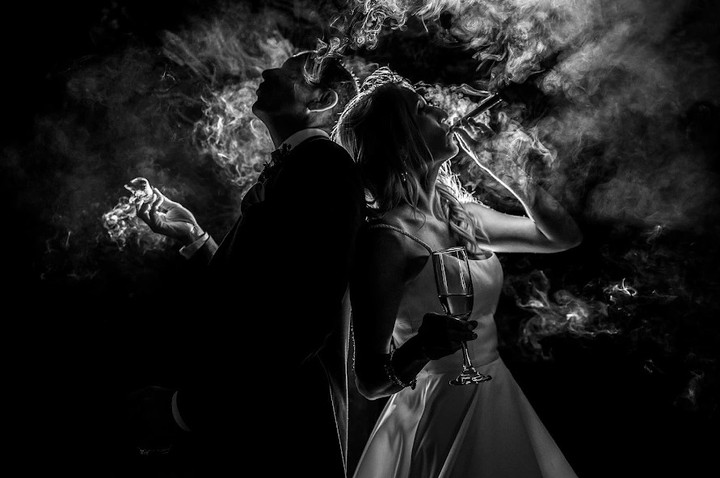
J. La Plante Photo brings together two figures, a glass and luminous smoke. The dark background gives the illuminated edges room to unfold. The image feels self-contained, like a scene you have arrived at halfway through.
When choosing photographs for an album, notice which ones keep pulling you back after the first impression. Sometimes it is the grandeur; sometimes it is the hand at the edge of the frame. A monochrome image earns its place when there is still something to feel after you have finished admiring how it looks.
Continue with bridal portraits with a personality of their own or love drawn in silhouette.