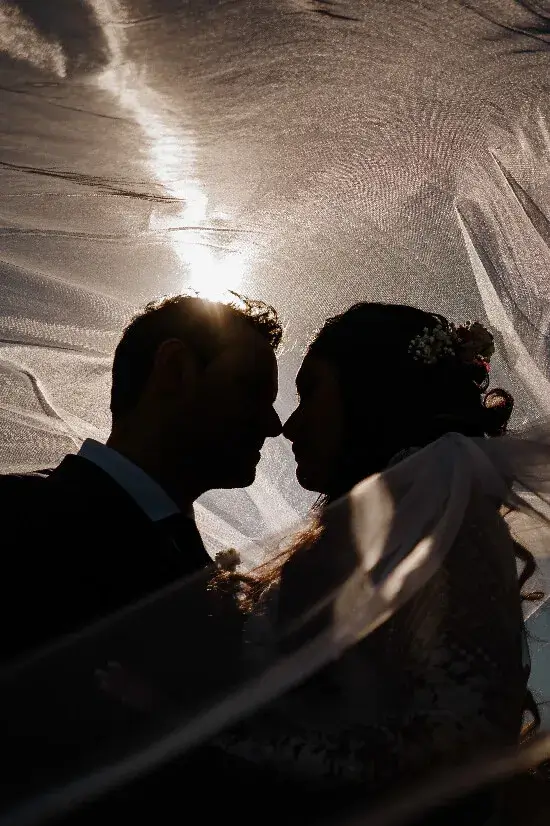
A photograph of a ring can show what it looks like. A photograph of the hand wearing it can show something else as well: a grip, a pause, the way two people find each other. Wedding details become more interesting when they belong to a moment.
This is not an argument against photographing beautiful objects on their own. It is an invitation to keep some of them in use. A sleeve can be straightened, a veil can be held and a hand can rest exactly where it naturally wants to be.
Let texture tell part of the story
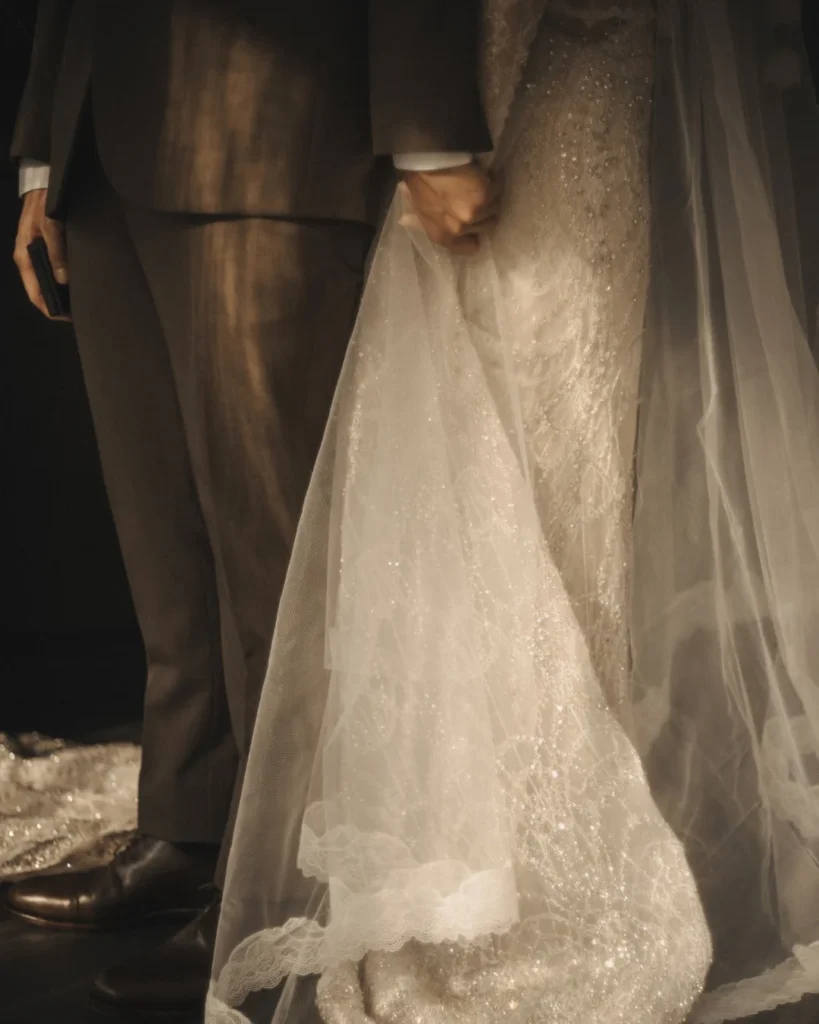
In Diantara Jingga’s close view, lace, tailoring and joined hands share the frame. Removing the faces changes what we notice. Fabric gives the eye detail to explore, while the touch keeps the image connected to the couple.
Before the wedding, tell your photographer which objects have meaning and why. A borrowed piece of jewellery or a button sewn by someone close may deserve attention that its appearance alone cannot explain. Share that context privately; not every family story needs to become a public caption.
Keep the gesture readable
A tighter crop can simplify a photograph, but it can also make a hand or a piece of clothing difficult to understand. Leave enough context to show how things connect. If the picture needs a long explanation to identify what is happening, consider a slightly wider version too.
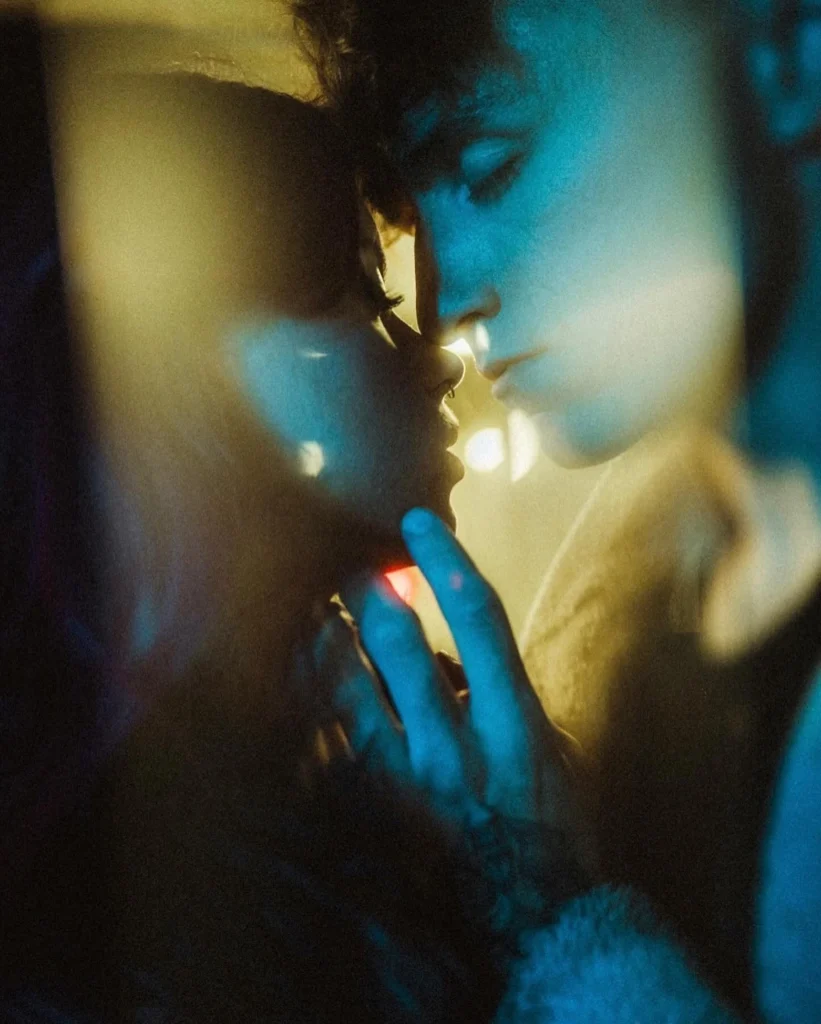
In Jirka Votava’s close portrait, hands and faces give us somewhere to settle among the colour. The photograph feels intimate because there is a relationship to read, not simply because the camera is near.
Make room for the ordinary touch
Ask for a little time without adding a new performance. A couple can sit together, adjust a sleeve or pause between portraits. The photographer can watch for a gesture while the people remain comfortable. Nobody needs to recreate a supposedly spontaneous emotion on demand.
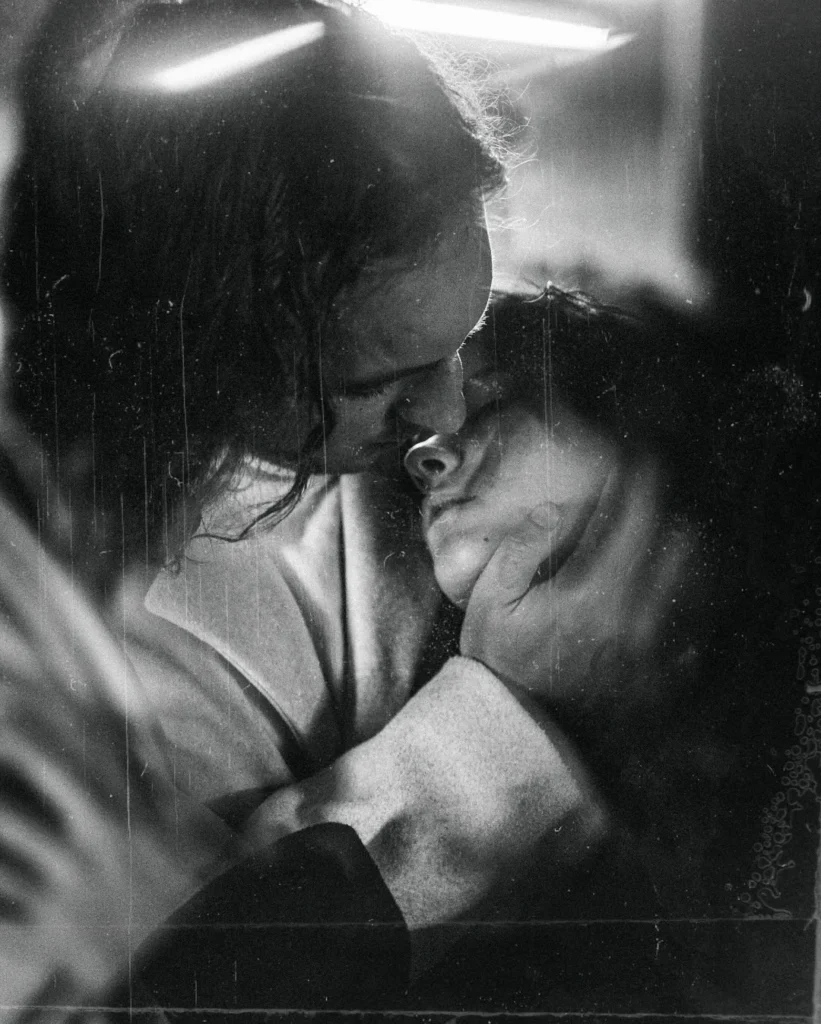
The foreheads meeting in this monochrome portrait offer a small, clear point of connection. It is a useful reminder that a detail photograph does not have to centre on an expensive object. Sometimes the important detail is simply how close two people choose to be.
Choose details that work in a sequence
One close photograph can sit beautifully beside a wider scene in an album. Ten almost identical close-ups may lose that effect. When choosing images, alternate scale: the place, the people, a gesture, then a return to the wider story.
Ask for the objects that matter, leave room for the unexpected and let the details live among the other photographs. For more visual ideas, explore creative wedding ring photographs. When the gallery arrives, use our guide to choosing photographs for a wedding album to give those small moments their place.