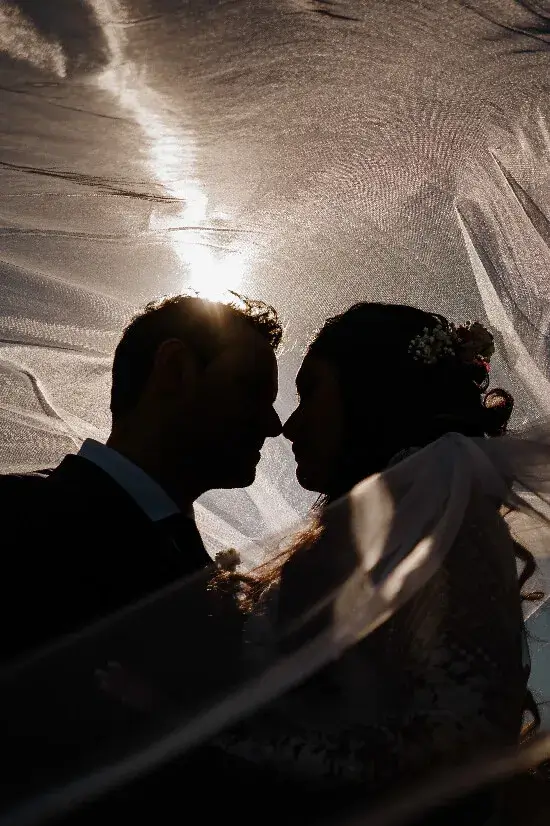
Some portraits introduce themselves immediately. Others let you find your way in. In this selection by Azyan Syazwani, @azyn_, a change of direction, a streak of light or an unexpected reflection makes that second kind of looking part of the experience.
These wedding and couple images are useful to study because the visual ideas do different jobs. One changes how two faces meet. Another changes the atmosphere around them. A third gives each person a separate space inside the same photograph. The effect is not one repeated trick, but a series of decisions about how to reveal a relationship.
Turn the relationship around
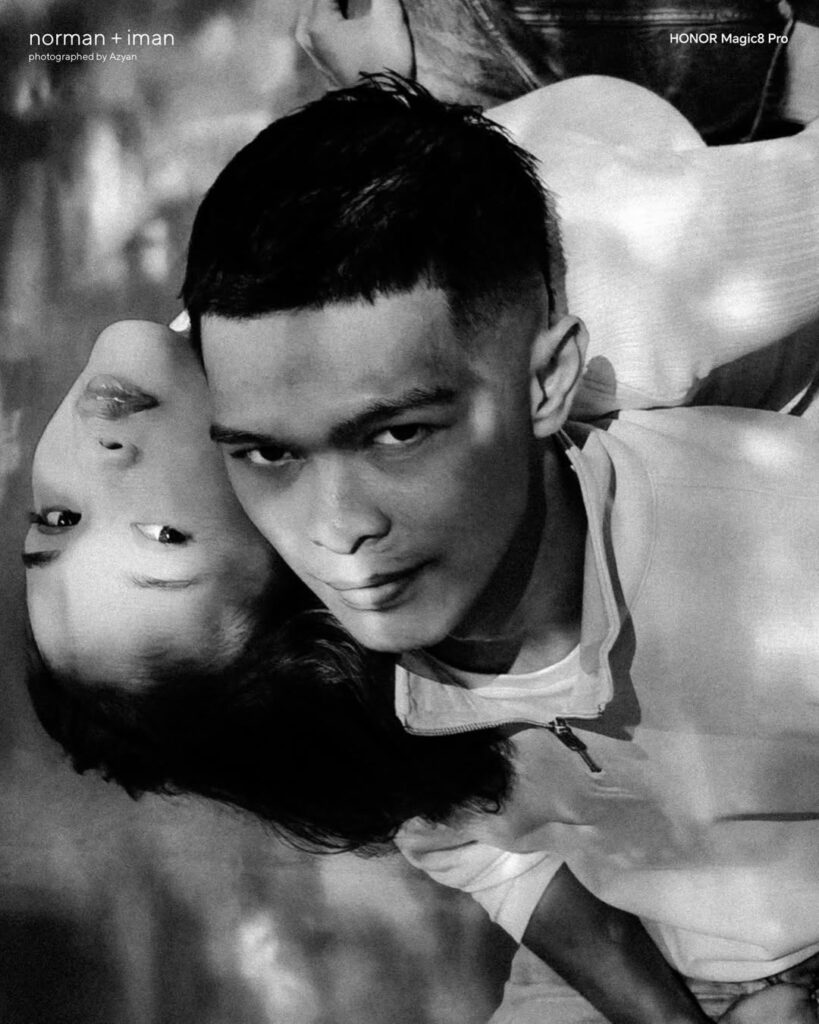
In the black and white portrait, the faces run in opposing directions. That arrangement asks us to read the image more slowly than a straightforward side-by-side pose. The closeness is still clear, but the orientation makes familiar features feel newly noticeable.
Direction is doing much of the work here. Before thinking about elaborate equipment, look at where heads, shoulders and eyes lead. Do the two people form one shape, or pull in different directions? Neither answer is automatically better. The interest comes from making the choice feel deliberate.
Make atmosphere part of the view
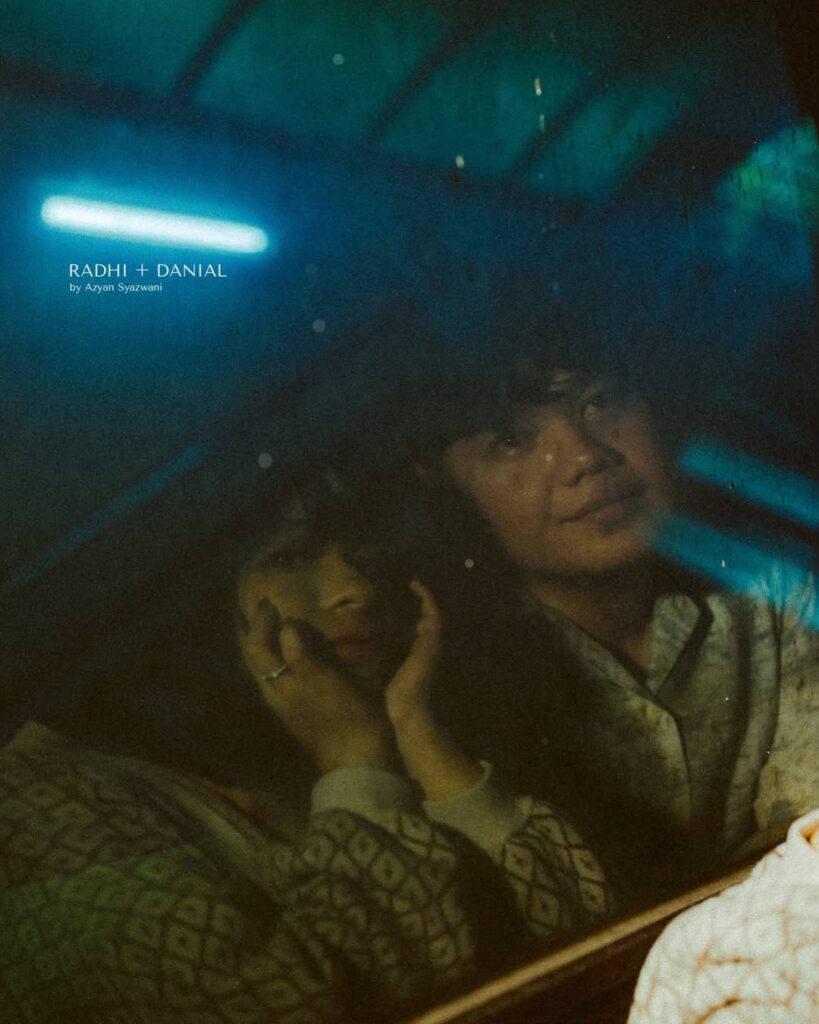
The blue-lit photograph places a layer between viewer and couple. Glass, light and the darker surroundings soften the sense of direct access. We can see enough to understand the closeness without being shown every detail equally.
It is an appealing reference for couples who like a moody image but do not want their entire gallery to become hard to read. Ask for a small experimental sequence alongside clear portraits. That gives the atmospheric pictures a useful contrast and leaves you with photographs that serve different purposes.
Give each person their own plane
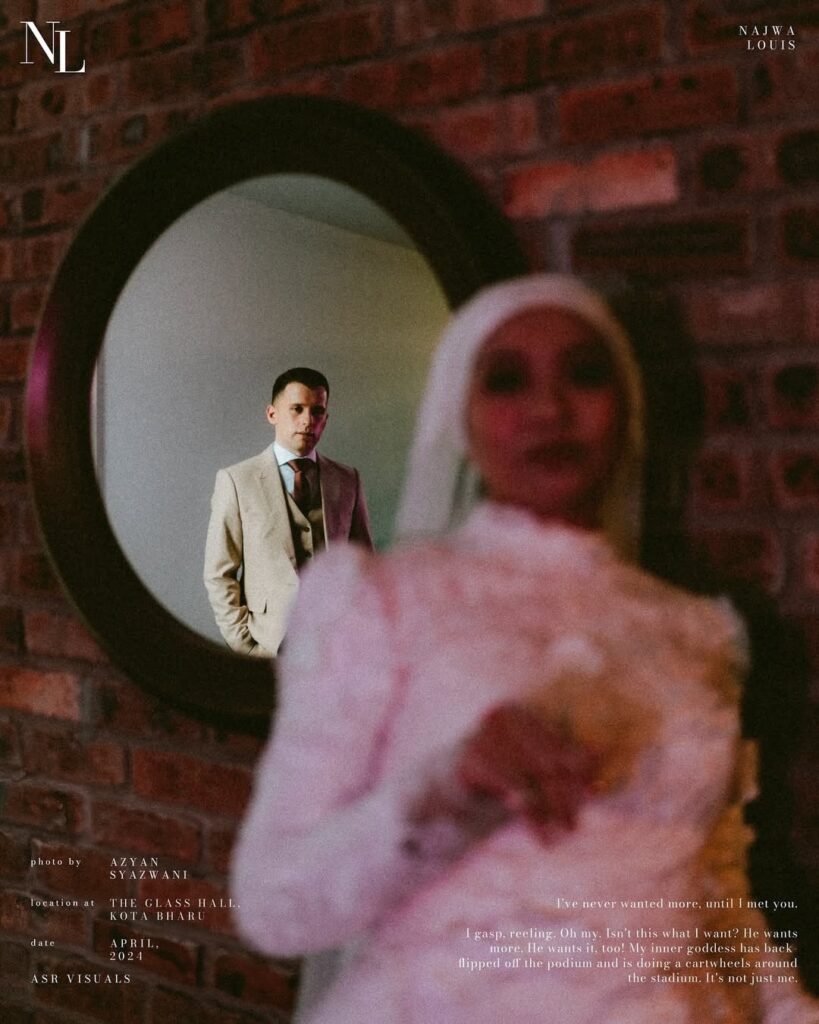
A circular mirror introduces the person farther back while a softer figure occupies the foreground. The image holds two distances at once. The round shape provides a clear place for the eye to land, so the complexity has an anchor.
Notice how this differs from simply putting a couple in front of a mirror. The reflection is part of the structure. It controls where we discover one person and how that discovery relates to the person already in front of us. A small change in viewpoint would create a different picture.
Choose curiosity with a purpose
When you save references like these, write down what attracts you: opposing directions, a feeling of privacy, the surprise of finding a second face. Those descriptions are more useful to a photographer than a request to reproduce an image exactly. They leave room for your location, your clothes and your own way of being together.
For photographers, a useful editing question is whether the extra layer contributes something specific. If it hides the expression that matters, it may be working against the portrait. If it gives the viewer a path towards that expression, it earns its place.
Explore the original carousel, then compare these ideas with our guide to leaving space in wedding portraits. Complexity and simplicity can both lead to a clear, memorable image.