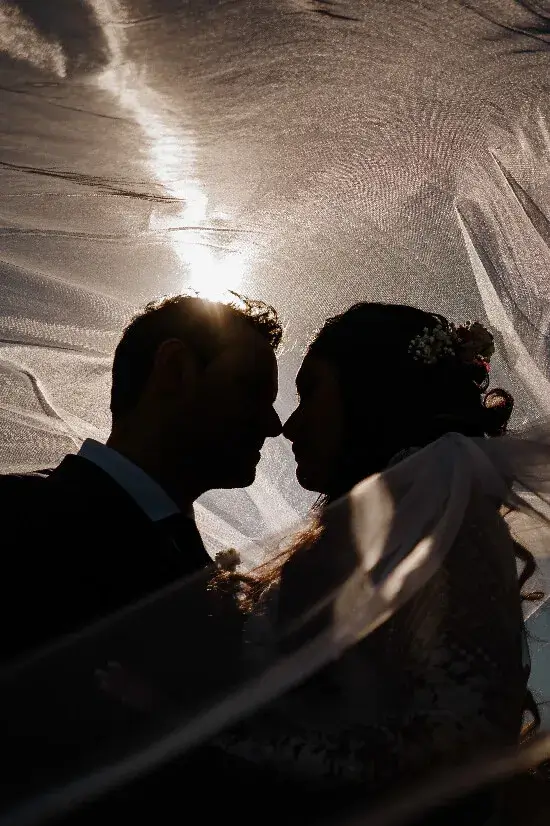
Your wedding photographs do not need the most recognisable building in town to feel rooted in a place. Sometimes an orange shutter, a weathered balcony or the lane behind a favourite café tells a more personal story. The best city wedding photo locations can be ordinary places you have a reason to notice.
That opens up a useful possibility: a short, enjoyable route rather than a tour of compulsory landmarks. Choose a few nearby settings with different visual qualities, then leave enough flexibility for the photographer to respond to the light and the people around you.
Find one strong visual ingredient
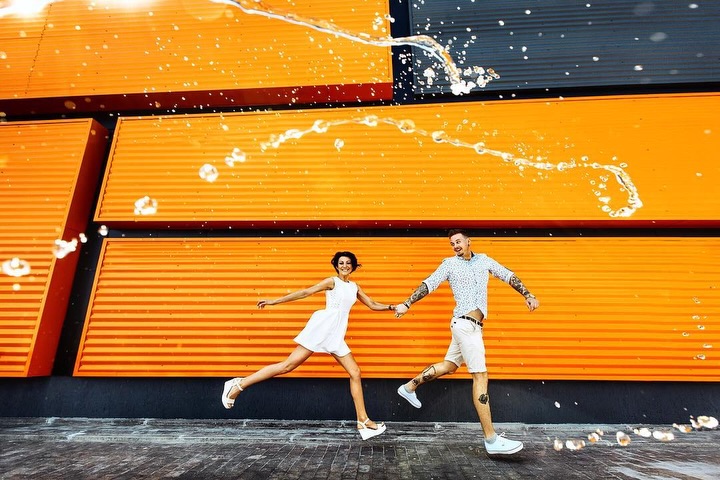
In Alexandr Korobov’s photograph, orange shutters give the scene a clear identity. The couple’s movement and the droplets above them add energy, but the wall is what holds the colour together. A visually simple background can support quite a lively picture.
When looking for your own locations, notice broad colour, texture and light before looking for a famous name. A shutter, tiled wall or shopfront may offer a strong setting without requiring a long journey. The point is to choose what genuinely appeals to you, not to turn the city into a scavenger hunt for fashionable backdrops.
Keep the details that belong to the place
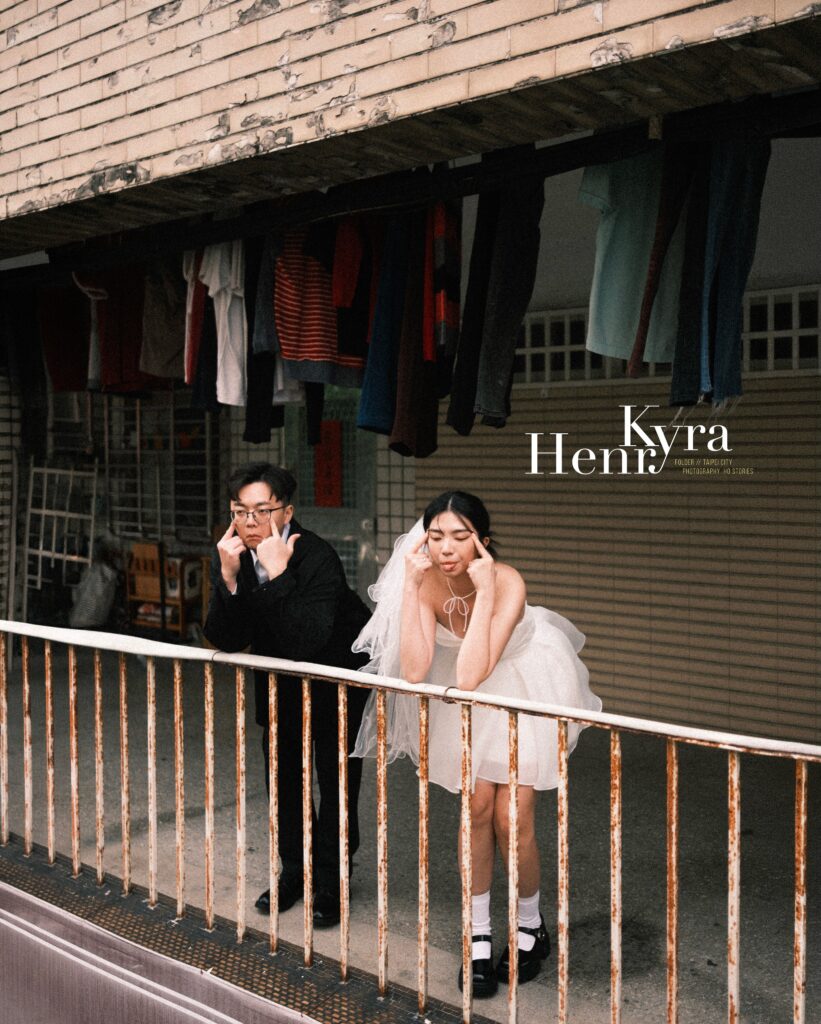
The HO Stories photograph beside a railing lets the building remain recognisably everyday. Its textures and proportions become part of the portrait. The setting does not need to be pristine to have character.
Talk to your photographer about what draws you to a place. Is it where you met friends, the neighbourhood where you lived or simply a street whose colours you enjoy? That context can help them decide which details to include. You can have a meaningful portrait without adding a sign that explains the entire story.
A small lane can offer several pictures
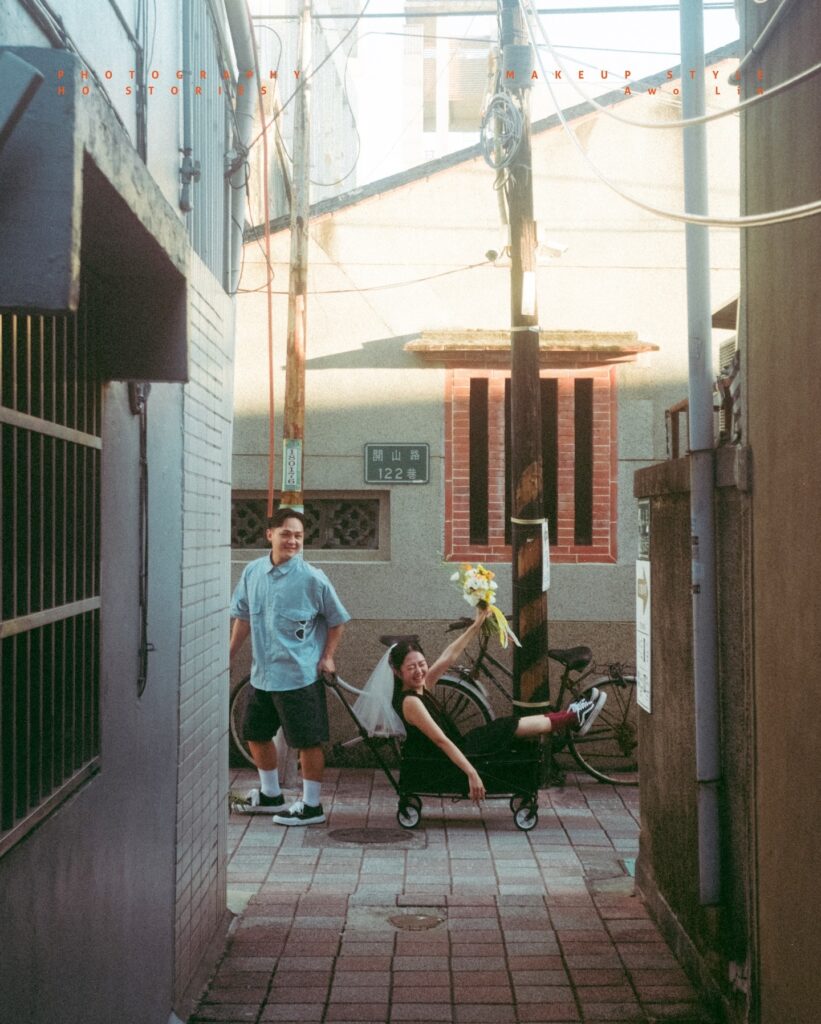
The narrow alley in the third photograph supplies depth, light and ordinary objects within a compact space. It shows how much a modest location can contain when the viewpoint is considered carefully.
For a wedding day, that compactness is valuable. Fewer transfers mean less time getting in and out of vehicles, gathering belongings and finding one another. A single block with an open area, a sheltered corner and a quieter stretch may give more useful variety than three distant destinations.
Plan the route people will actually walk
Check the location at a similar time of day when possible. Notice crowds, deliveries, uneven paving, steps and places to pause. Ask permission where access is private or a business needs to be involved. Keep entrances and pavements clear, and let the photographer adapt if a space is busier than expected.
Choose a meeting point and a finish point, then allow for the clothes and shoes you will actually wear. A ten-minute walk on an ordinary afternoon can feel different in a long dress while carrying flowers. If mobility, heat or comfort changes the route, simplify it.
Finally, keep one sheltered alternative nearby. Our guide to a photo timeline with breathing room can help you protect that flexibility. The city should give your portraits a setting, not become another appointment you have to rush through.