A brown sofa, a floor lamp and a blank wall: hardly the usual ingredients of an epic wedding photograph. In Nerry Prasetyo’s portraits, that ordinary room becomes somewhere worth looking twice. A familiar object interrupts a face; a small gesture gives another picture its centre.
Prasetyo, who shares his work as @realspures, is an Indonesian wedding and pre-wedding photographer. This visual profile looks at three of his photographs and the choices we can actually see: where he places people, how much space he leaves and what he lets compete for our attention.

A portrait can begin with a small gesture
In the close portrait, the woman’s hand rests near her earring. Her dark hair forms a clear shape against the lighter background, and her partner remains visible but softly out of focus behind her. The picture has a hierarchy: first the foreground face and hand, then the second person.
That separation gives the frame depth without filling it with objects. Both people belong to the picture, but they do not have to carry equal visual weight. The hand also gives the eye a route back towards the face rather than leaving it to wander into the background.
For photographers, the useful exercise is to notice what a small gesture changes. Make a simple portrait, then ask for one comfortable adjustment. Compare the shape of the hand and the space around the face. We cannot tell from this frame whether the gesture was prompted, but we can see why it holds the composition together.
Let an ordinary object be part of the joke
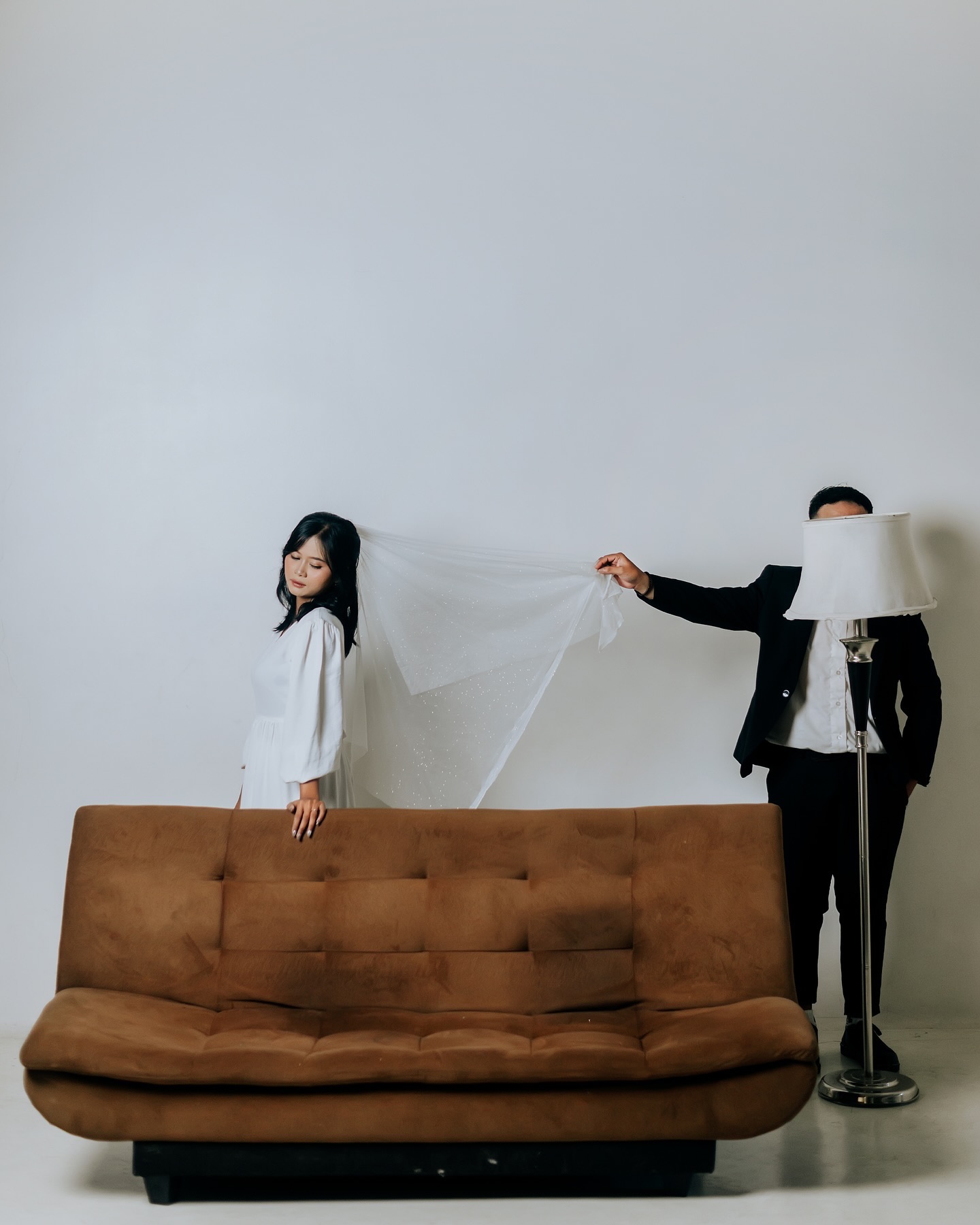
The sofa photograph is more mischievous. The couple stand behind the furniture, a veil stretches across the scene and the lampshade overlaps the man’s face. The room’s plainness makes that interruption conspicuous. You recognise the ingredients immediately, which is what makes their arrangement surprising.
The photograph does not depend on a spectacular venue. Its interest comes from the relationship between the people and the things already in the frame. Empty wall above them gives the eye a pause; the sofa’s broad shape gathers the activity into the lower part of the picture.
This is a reminder to inspect a room before filling it with more ideas. Look at edges, furniture and patches of colour. A slight change in camera position can make an object overlap a subject or separate cleanly from them. Decide whether the overlap adds meaning or merely gets in the way.
Then make space for a quieter version

In another image, the couple sit on the floor in front of the brown sofa. Their bodies occupy a compact area near the bottom of the frame, with a large expanse of pale wall above. The lamp stays at the edge. The furniture is familiar, but the energy is different.
The quieter picture matters because it gives the series range. A sequence of visual surprises can become tiring if every photograph demands the same kind of attention. Here, the simple seated arrangement lets the subjects and the room settle.
Compare the two sofa frames side by side. The props do not explain the difference on their own. Placement, gesture and empty space change how the scene feels. That is a useful lesson when a location seems exhausted after the first promising photograph.
Borrow the question, not the entire photograph
Try asking: what can this space do besides serve as a background? A doorway might divide two people; a chair might give a stiff posture somewhere to rest; a quiet wall might make a small gesture easier to see. Start with what your couple can comfortably do, then build the frame around that.
Keep an uncomplicated portrait alongside any experiment. Creative frames are more useful to a wedding gallery when they add to a clear record of the people. For couples, our wedding photography style guide explains how directed portraits can fit the day.
To see more of Prasetyo’s work, visit Realspures on Instagram. The appeal of these images is how much attention they give to modest ingredients. The next interesting photograph may begin with the room you were about to walk past.