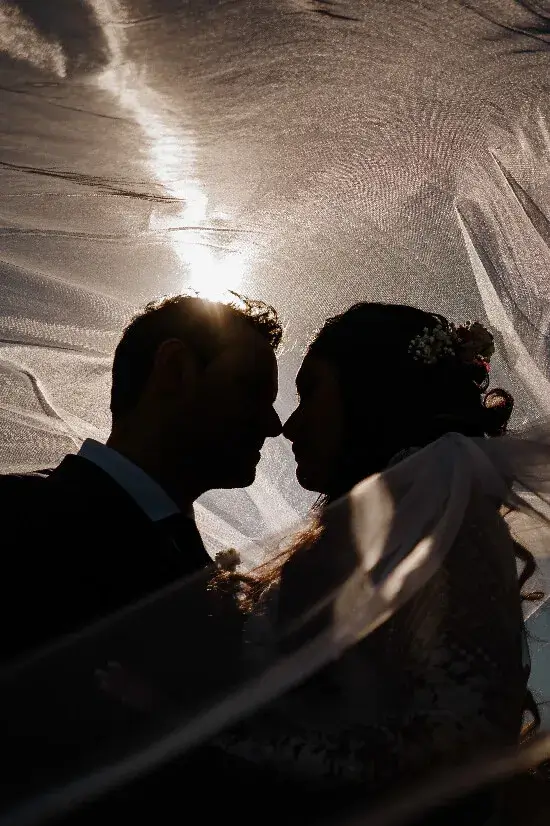
Sometimes the light behind a couple is the thing that makes you stop scrolling: a glowing edge around a veil, a bright line along a cheek or a flare that turns an ordinary corner into somewhere you want to stay. Backlit wedding photos can feel generous and alive.
The challenge is giving that glow a job. Light should help us find the people, not make us search for them indefinitely. Decide which part of the photograph needs to remain clear, then let the atmosphere build around it.
Choose between a readable face and a silhouette
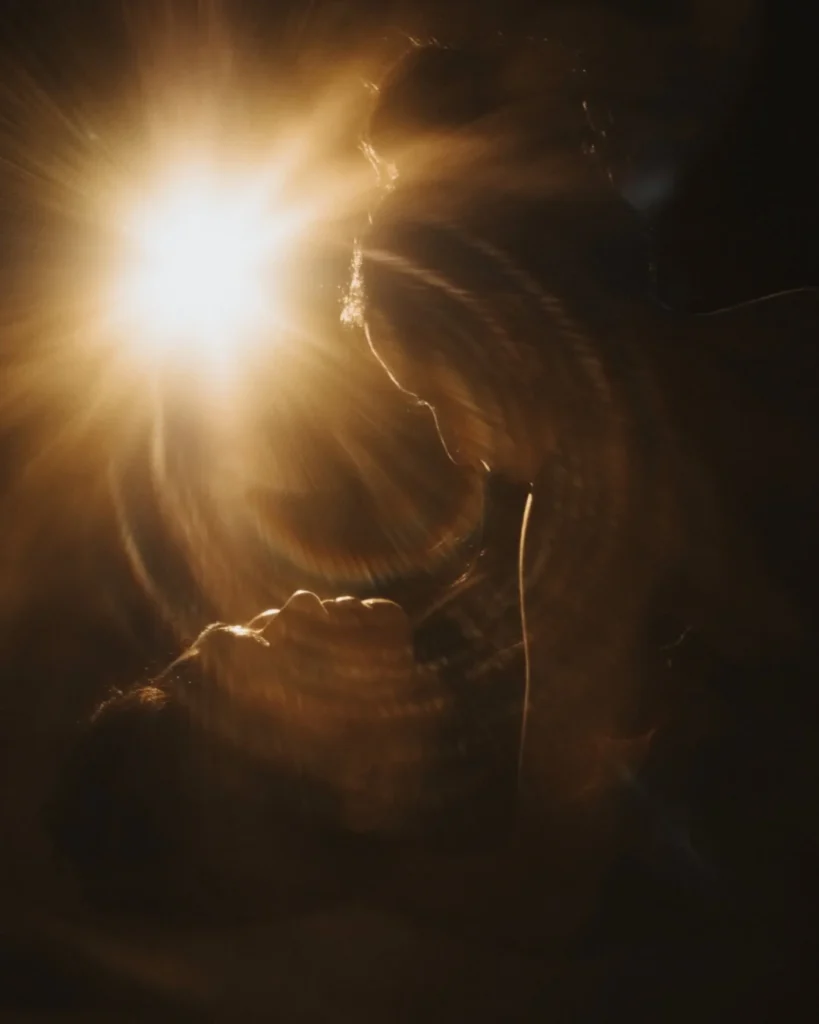
Backlighting simply means that the main light comes from behind the subject, towards the camera. Exposing for a bright background can leave the people dark; prioritising the faces may make that background much brighter. Neither is automatically a mistake. They tell different kinds of stories.
In Diantara Jingga’s warm portrait, the joined hands and profiles provide a connection within the glow. When sharing references, say whether you love the feeling, the visible expressions or the outline. Your photographer can then make an intentional choice rather than guessing which part matters most.
Move a little before changing everything
A small change in angle can hide a bright source behind a head or reveal it at the edge of a shoulder. That can alter flare and contrast dramatically. Give the photographer room to explore those positions while the couple stays comfortable.
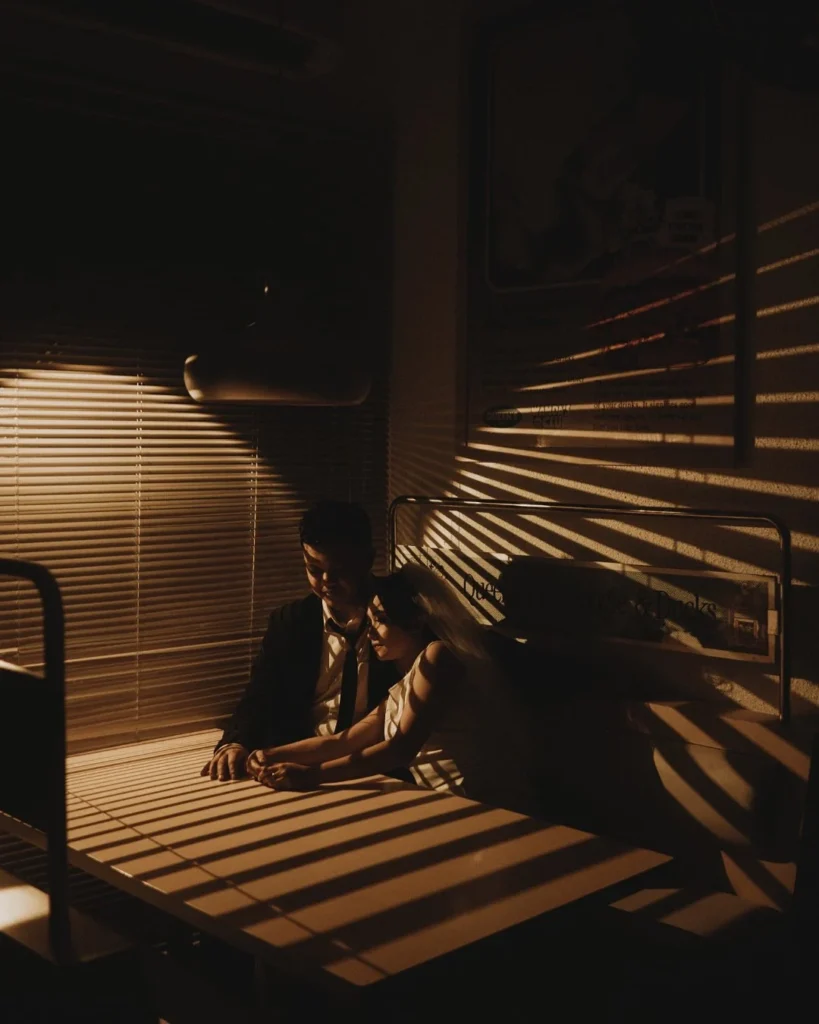
Not every striking beam needs to become a glowing portrait. The striped light in this interior creates a more graphic scene. A session can include both approaches: one photograph about softness, another about a precise shape of light.
Do not make your day depend on a perfect sunset
The light near sunset changes with the season, weather and location. A building may block it earlier than the sunset time suggests. Ask the photographer to check the actual spot, keep the portrait break short and agree on an alternative if the sky changes.
Do not stare directly at the sun to reproduce a reference. Comfortable eyes and a relaxed expression matter more than forcing an angle. Your photographer can work around your position.
Keep an alternative frame
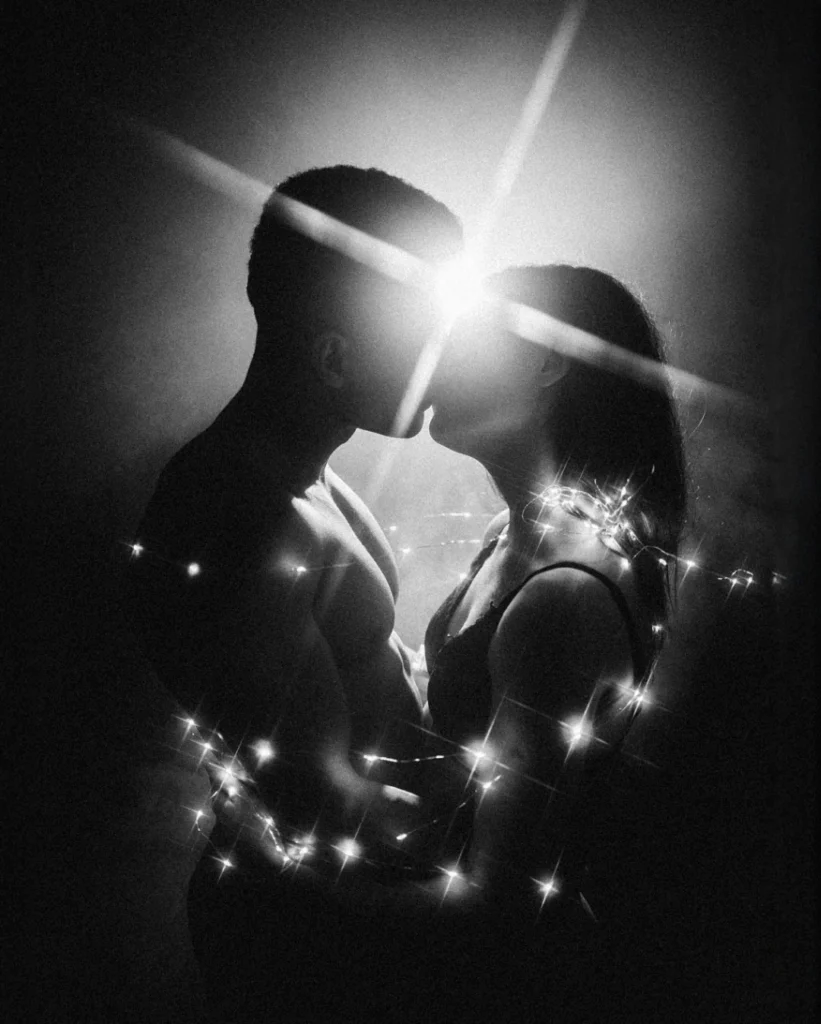
The bright star-shaped highlight in Jirka Votava’s monochrome portrait becomes part of the composition. The image shows a visual result, not enough information to identify the exact equipment or exposure used. Take it as inspiration for placing light, rather than a recipe tied to a particular product.
It is useful to have one expressive frame and another where faces are easier to read. Those choices can sit together in the same gallery. Explore wedding silhouettes and shadows for a darker interpretation, or plan a short break with our wedding photography timeline guide.