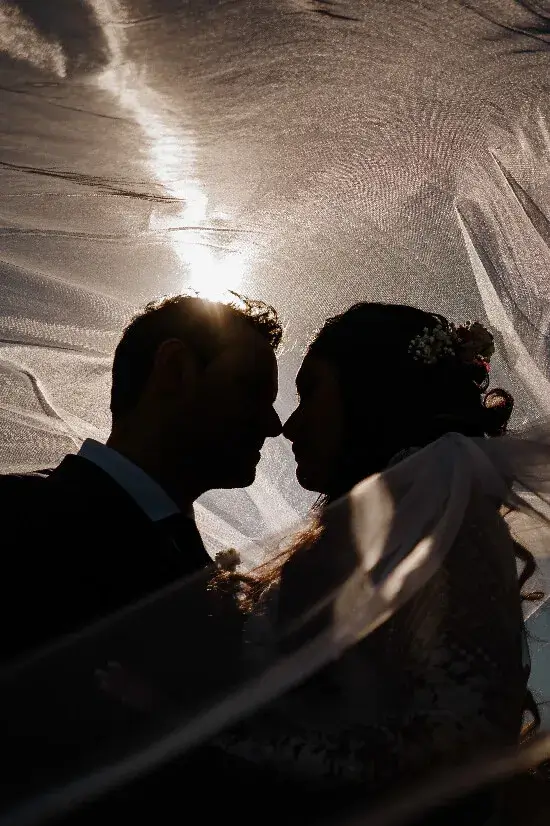
A wedding location changes character when you look down at it. A rug becomes a graphic border. A patch of light becomes an island. A net becomes a line that two people can lean across. Overhead wedding portraits are interesting because they reveal relationships that are easy to miss from eye level.
The angle alone is not the idea. The useful question is what becomes clearer from above: a pattern, a gesture, the shape of a dress or the distance between two people. If none of those changes, an elevated viewpoint may simply be making the photograph harder to arrange.
Find a ground worth looking at
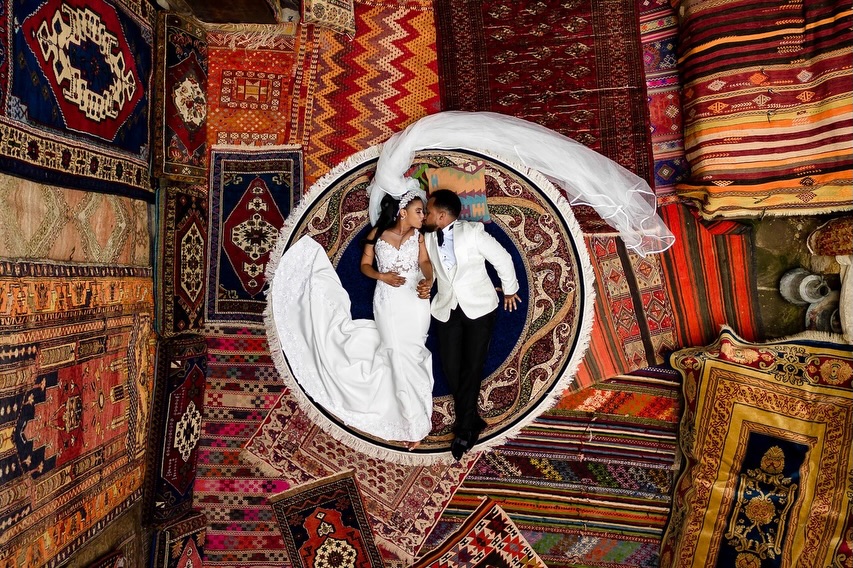
In Ufuk Sarisen’s portrait, patterned rugs surround the couple and give the frame its identity. The circular centre is an especially clear resting place for the eye. There is plenty to look at, but the people are not lost inside the decoration.
When scouting a location, look at the surface as carefully as you would look at a wall. Tiles, carpets, steps or the edge of a courtyard may create a useful structure. Then consider whether the couple will still be readable once their faces become smaller in the frame.
Let light organise the space
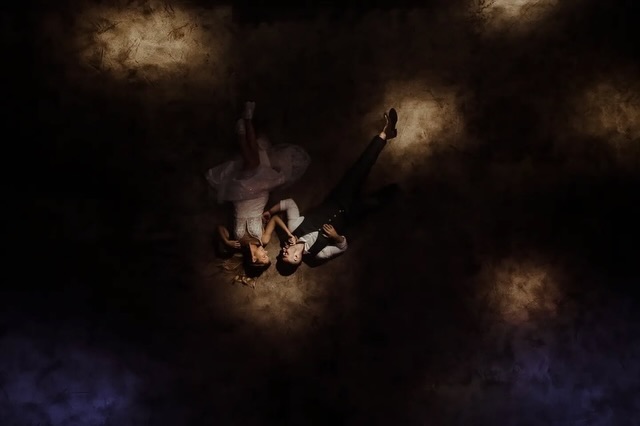
Giorgos Kouzilos’s darker image works with patches of warm light. From above, those patches have a visible relationship to the figures and the ground around them. The lighting becomes something you can almost map.
This kind of composition benefits from restraint. If the ground is already visually complicated, adding several props may make it harder to understand. One gesture and one area of interest can be enough. Make a test picture before asking the couple to settle into a position, then check the whole frame rather than only the centre.
Use a line to connect, not only divide
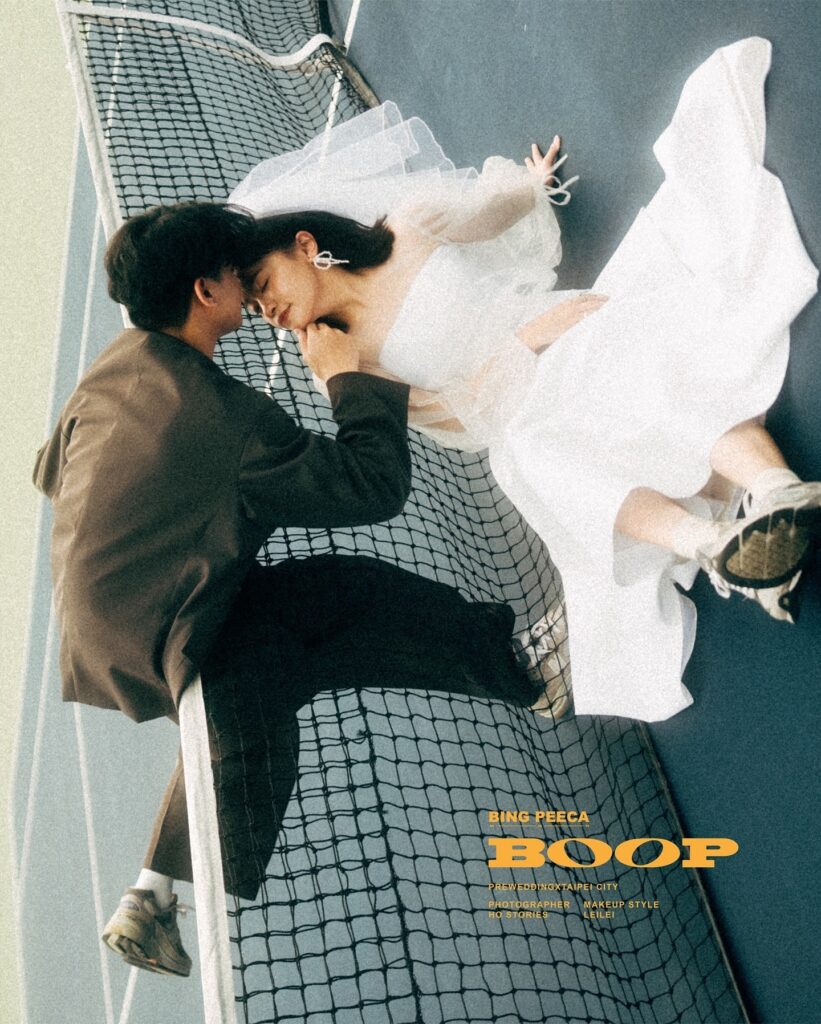
In the HO Stories photograph, a court net separates the two sides of the picture while the couple lean towards each other. The graphic division gives the gesture something to work against. We can read both the separation and the effort to close it.
That is a useful distinction: a line can be meaningful rather than merely decorative. A path, a step or the edge of a rug might create a similar conversation. Choose the element that belongs to the location instead of adding one just to imitate the reference.
Make the viewpoint fit the day
Discuss an elevated portrait before the wedding if it needs a particular space or arrangement. Ask the venue what is accessible and permitted. A safe balcony or an ordinary upper-level viewpoint may be all you need; the finished photograph does not tell us which equipment produced it.
Do not improvise with unstable furniture or ask someone in wedding clothes to climb for a composition. The picture can be redesigned around a safe position. Also check whether lying or sitting on the surface is comfortable and acceptable for the outfit. An interesting floor is not automatically a practical one.
Give the elevated photograph a different role from your close portraits. It can establish the place or introduce a visual surprise in an album. Our article on building a three-frame story explores how that wider perspective can sit beside a gesture and a detail.