Someone says “act natural,” and suddenly you have no idea what your hands normally do. If that sounds familiar, your wedding portraits do not need a more impressive version of you. They need a plan that makes being photographed a little easier.
For camera-shy couples, the useful goal is comfort, not a performance of confidence. You can enjoy quiet photographs, ask for clear instructions and leave the elaborate poses to somebody else. Here is a practical way to make that happen.

Name the part that feels awkward
Before the wedding, be specific with your photographer. Is it looking into the lens? Being watched by guests? Not knowing where to stand? Those are different problems, and “we hate photos” leaves your photographer guessing which one to solve.
Try a short note: “We are comfortable being close, but we freeze when asked to pose. Please give us one instruction at a time and show us where to start.” You can also mention movements you would rather avoid. A dip, a lift or a kiss is an option, not an obligation.
In The Knot’s advice for camera-shy couples, photographers emphasise trust and communication. Use that conversation to explain what reassurance sounds like to you: some people appreciate encouragement, while others prefer a calm, matter-of-fact approach.
Build a small portrait plan, not a second event
Agree on one nearby place to begin, a comfortable standing or seated position and a simple fallback if the location is busy. Ask your photographer how much time that needs at your venue. Include the walk there and back; a short session can still feel rushed when nobody has counted the stairs, the dress adjustments or the missing bouquet.
If other people watching makes you tense, nominate one person to help gather family groups and let the couple portraits happen without a crowd of extra cameras. Your photographer and planner can help protect that little pocket of time.
Give your attention somewhere to go
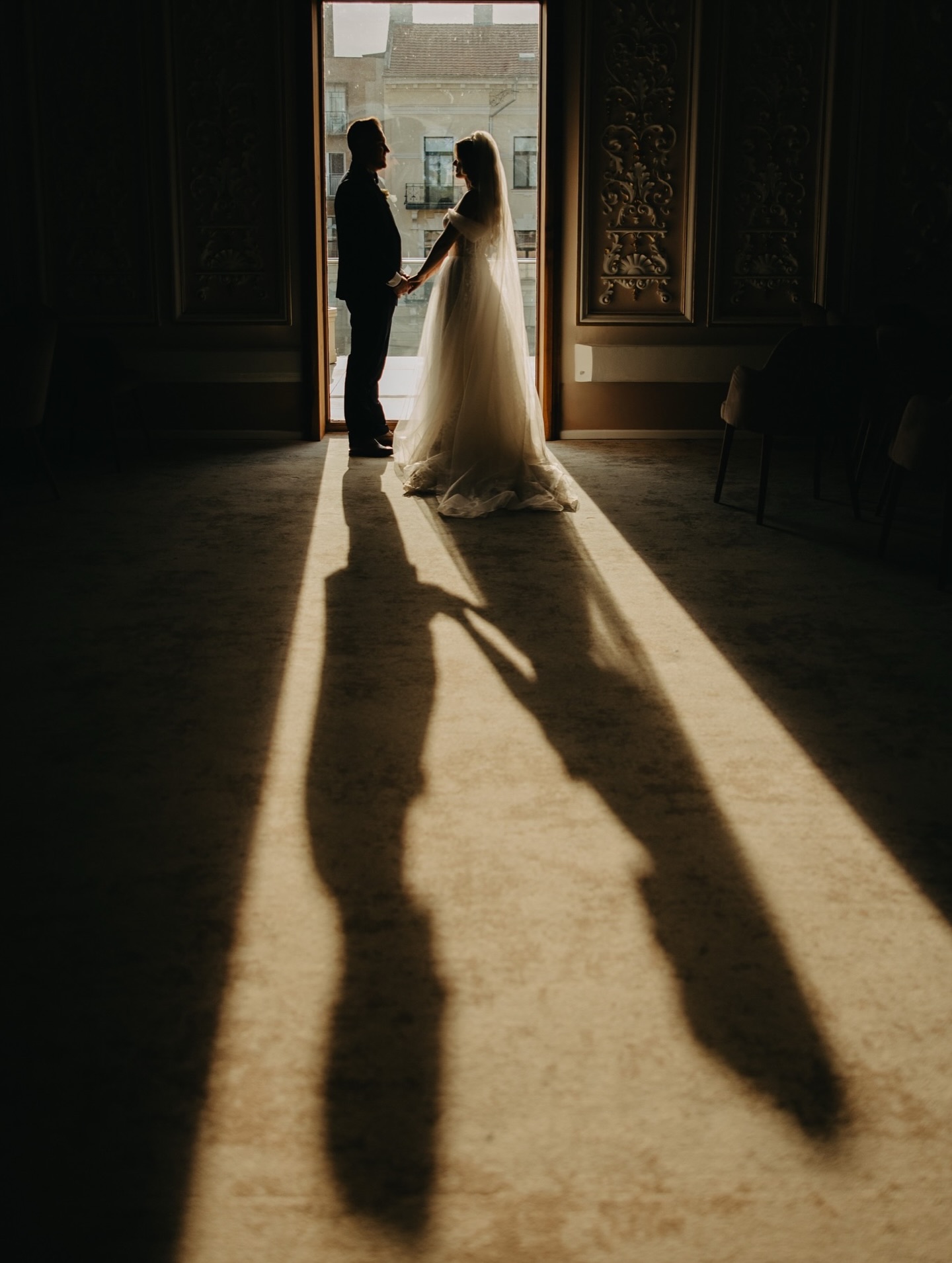
You do not have to maintain eye contact with the lens for an entire session. Ask to start with something concrete: standing side by side, turning towards each other or letting your hands meet. A useful instruction has an end point. “Turn until you can see each other” is easier to follow than “be romantic.”
Let a position settle before changing it. Check that your shoulders feel comfortable and that you can breathe normally. If a prompt feels theatrical, say so. A quiet look or a small touch may suit you better than an exaggerated laugh.
Choose a position your clothes allow
Test sitting, taking a step and raising your arms when you try on your outfit. This is practical information for portraits: a tight skirt, a long train or unfamiliar shoes can turn a simple movement into a complicated request. Tell your photographer what works before they build a picture around it.
A seated photograph is worth considering if standing feels stiff, but the seat and the outfit have to cooperate. A chair may be easier than the floor. The studio image above is inspiration for a quieter mood, not a position every couple needs to copy.
Use a short reset when the smile gets stuck
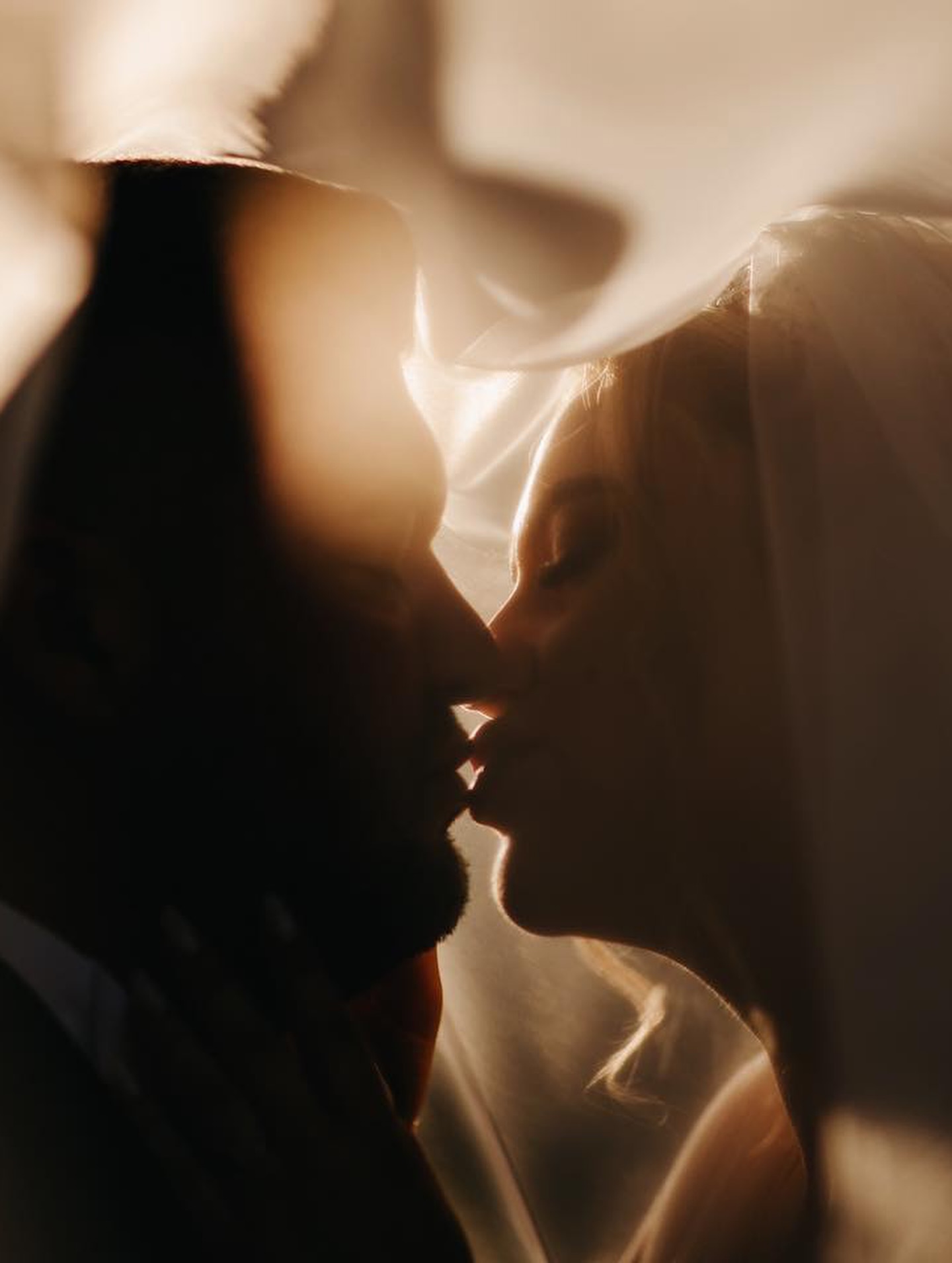
If you start monitoring every expression, ask for a pause. Lower your hands, look away and take a moment without instructions. Then begin with one small action. You do not owe the camera a continuous smile, and a serious expression can belong in your wedding story too.
You can agree on a simple phrase such as “let’s reset” before the session. It gives you a way to interrupt an uncomfortable pose without having to explain everything while guests are waiting.
Decide what a successful photo feels like
Pick three words together: perhaps warm, playful and close, or calm, elegant and spacious. Use those words when discussing reference images. Our guide to choosing a wedding photography style can help connect that feeling to how your photographer works.
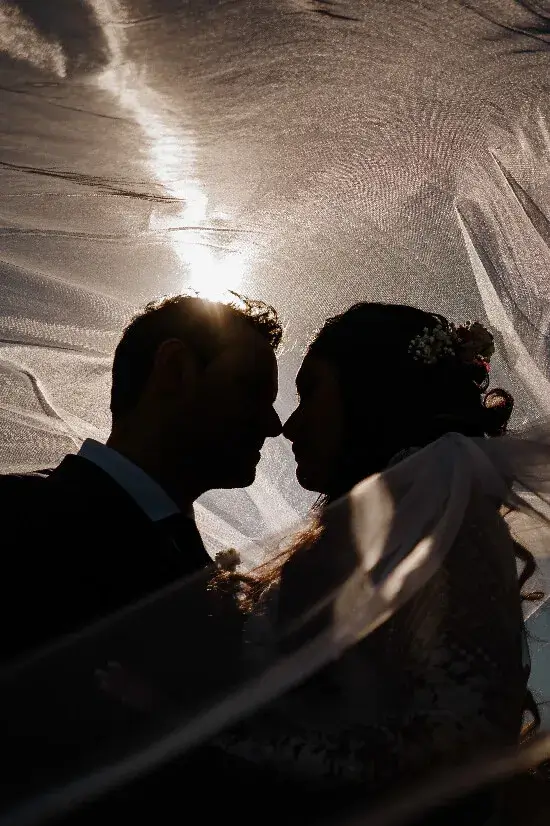
None of the people pictured here are being labelled camera-shy; their portraits illustrate different ways to occupy a frame. Your own photographs can be equally personal without borrowing somebody else’s expression. The session has done its job when you recognise yourselves in the result.