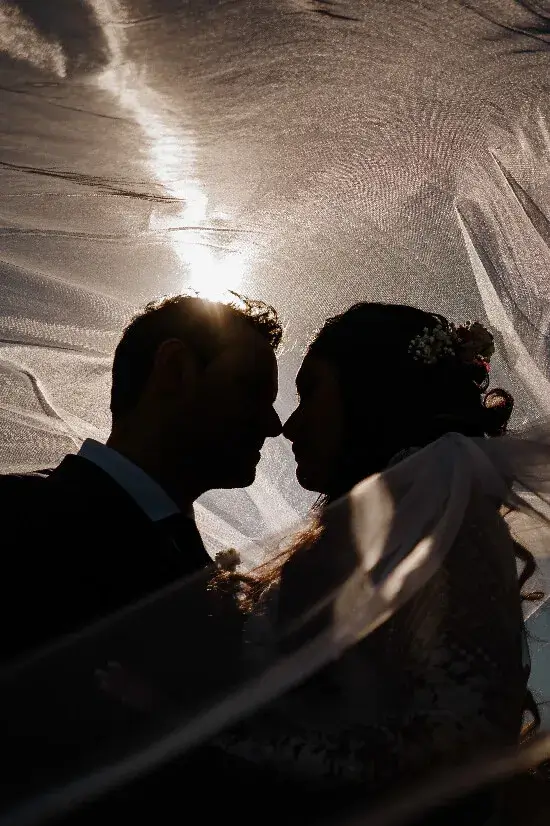
A window can show us a room and the world outside it at the same time. That makes glass a particularly interesting material in wedding reflection photography. It can introduce a second person, repeat a gesture or let the setting sit across a face.
The challenge is clarity. A reflection adds information, but more information is not automatically a better picture. Decide what the second layer contributes before asking the couple to wait. Is it revealing something we could not otherwise see, or merely making the main subject harder to find?
Look for a second view of the gesture
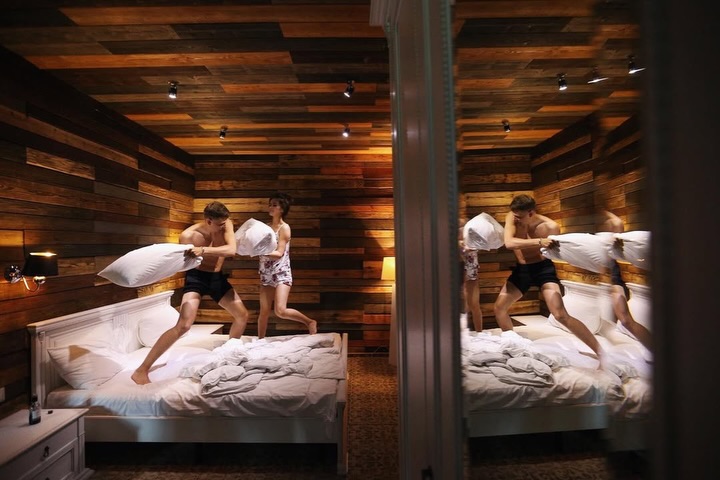
Alexandr Korobov’s timber-room photograph uses a repeated view of the couple to expand the scene. The vertical structure gives the reflections an order, while the moving fabric prevents the picture from feeling completely static.
For photographers, this is a reason to inspect the edges of reflective panels as well as their centres. The join between two surfaces may create a useful rhythm, but it can also cut through a face. A small change of position can be more effective than asking the couple to perform the same action several times.
Give the viewer somewhere to begin
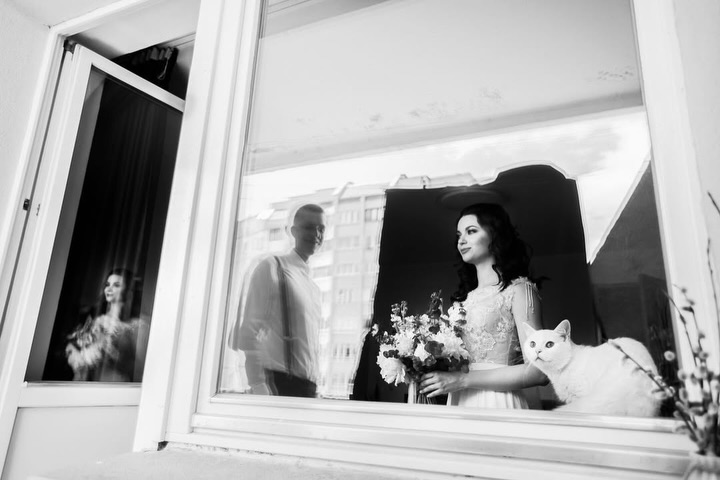
In the black and white window portrait, the bride is a clear starting point. Other figures and shapes sit within the glass and its surrounding frames. The image has layers, but it does not ask us to read all of them simultaneously.
A bright face, a recognisable gesture or a simple shape can provide that first point of attention. Once the viewer has found it, the reflection can reveal the rest. Think of the second layer as a discovery rather than a rival subject that must be equally loud.
Let the setting touch the portrait
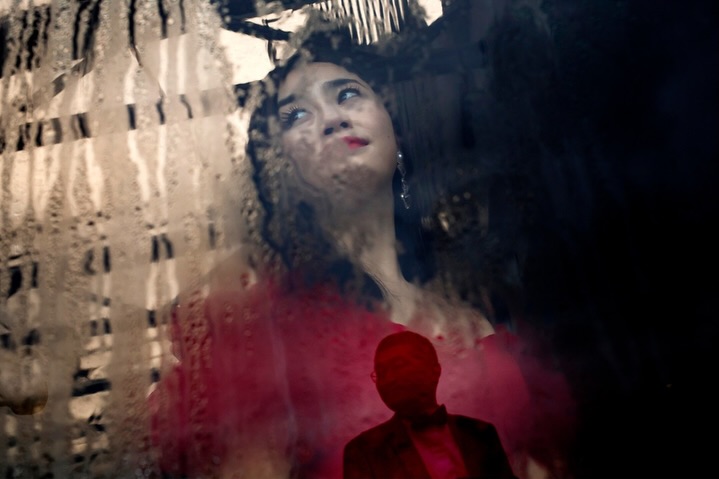
Ufuk Sarisen’s photograph allows a building pattern and a woman in red to occupy the same surface. The architectural texture changes the feeling of the portrait: we are looking at a person and a place in conversation.
When working with windows, walk a little to either side and watch what changes. The balance between what appears through the glass and what appears on it may shift substantially. Study the visible result rather than assuming the first position is the one you need.
Check the whole frame before you finish
Reflective surfaces can introduce people, signs or bright objects that were not obvious while concentrating on the couple. Scan the corners and the area behind the photographer. Look for an unintended camera reflection, a distracting edge or a patch of brightness pulling attention away from the face.
Then make a clear portrait as well. The layered version can be the more intriguing photograph, while the direct view may be the one that shows the expression best. Having both gives an editor or a couple a real choice rather than asking a single image to do every job.
For couples, the practical contribution is simple: mention interesting mirrors or windows at your venue, then let the photographer judge how they work in the available light. You do not need to purchase or transport a special prop. Compare this idea with framing a wedding portrait; a reflection can add a second view, while a frame can help organise the first.