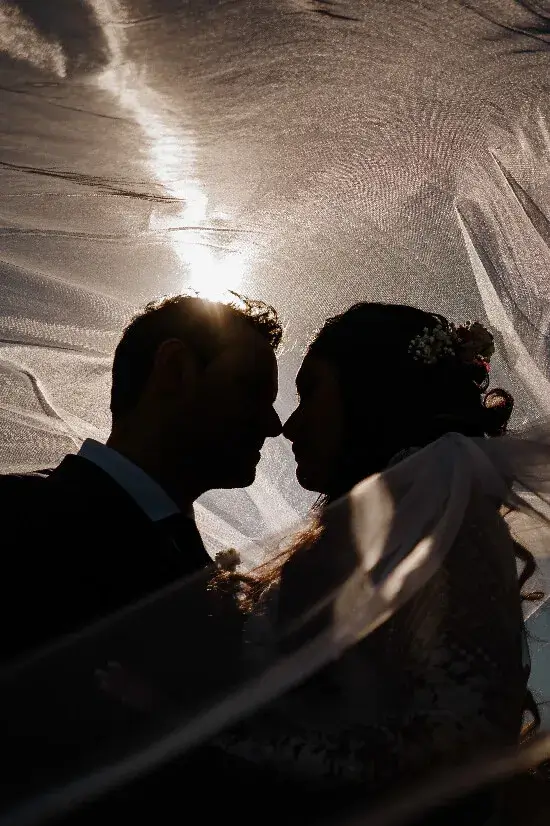
There is often more than one useful picture between the camera and the couple. A person close to the lens, a stretch of floor or the edge of an object can give a portrait a sense of distance. Foreground in wedding portraits works best when it does something specific: leads, balances, reveals or briefly hides.
This is different from adding a decorative blur to every image. A foreground has a relationship to what is behind it. Change its size or position and you change the way the viewer enters the scene.
Use scale to make distance visible
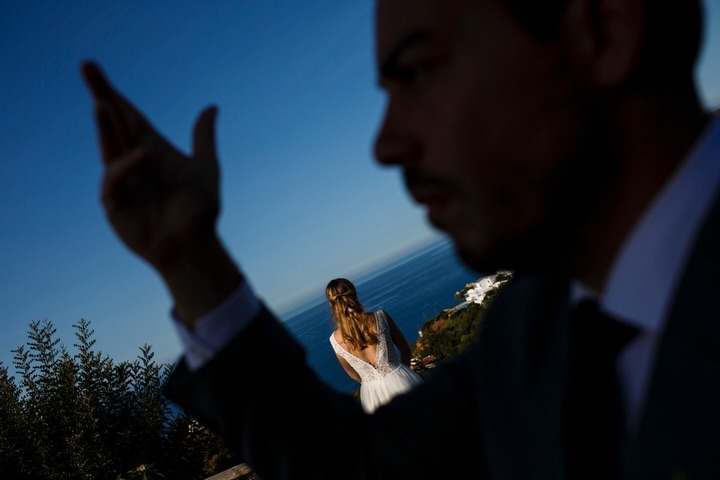
In Ufuk Sarisen’s photograph, the nearer figure occupies a large part of the frame while the person beyond appears much smaller. We understand the distance immediately. The nearer person is not simply an obstruction; he establishes the space through which we look.
Try deciding which person or gesture the image is really about before adjusting the composition. A large foreground element can be powerful, but it should not accidentally hide the expression that gives the photograph its meaning. Watch the gap between the shapes as carefully as the shapes themselves.
Let the floor become a path
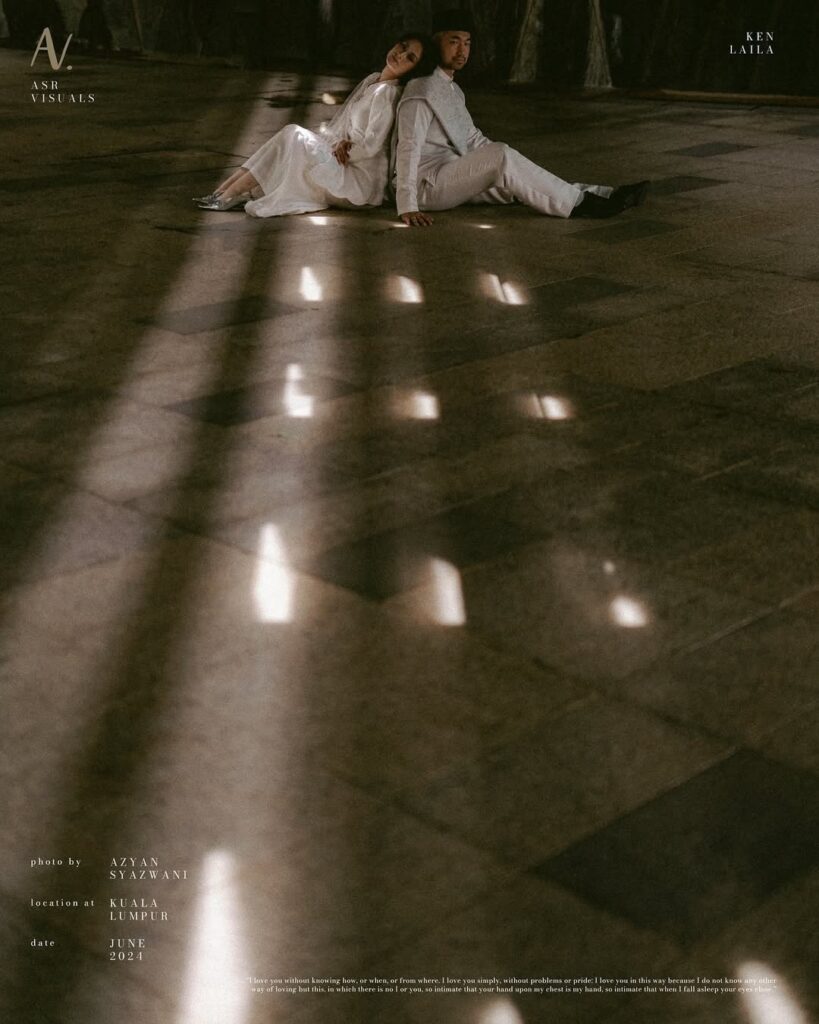
Azyan Syazwani’s photograph gives the foreground to long shadows. They create a route across the floor towards the couple. The space is active, even though it contains no extra prop or dramatic foreground face.
This is a useful option when a location seems visually plain. Look for changes already present in the light: bands, edges, pools or shadows. Ask whether they lead towards the subject or away from it. Moving a little left or right can turn a random pattern into a more organised path.
A bold interruption needs a clear payoff
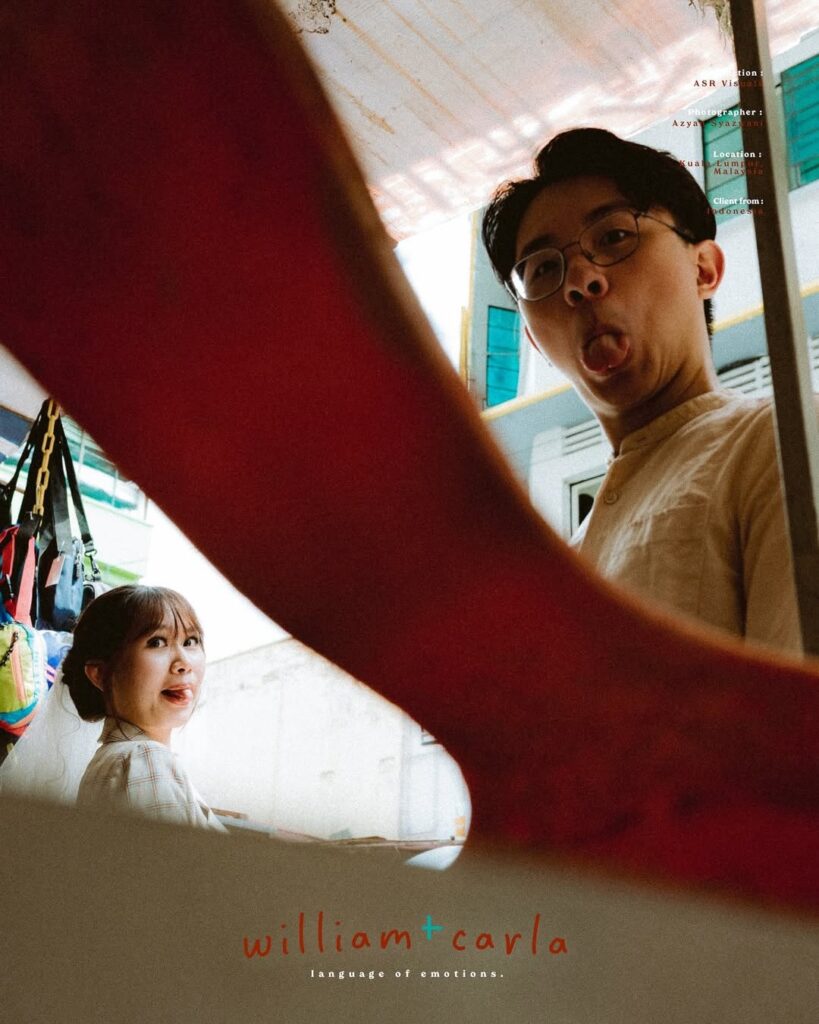
The large red shape in the third photograph interrupts a substantial part of our view. The couple’s playful expressions make the interruption feel intentional. There is something to discover around the shape, so the unusual viewpoint has a reason to exist.
For photographers, this is a useful editing test. Cover part of the frame with your hand while reviewing the picture. Is the image stronger because the foreground is there? Does it create tension or humour, or does it only reduce the amount we can see? Keep the version in which the idea is easiest to understand.
Build variety without collecting tricks
You do not need a foreground in every wedding portrait. A clean, direct picture gives layered photographs something to contrast with. During a session, make the straightforward view first if time is tight, then try one variation that uses the nearby space differently.
For couples, be open to a photographer moving around you rather than constantly asking you to change poses. Sometimes the interesting difference happens entirely on their side of the camera. You can remain comfortable together while the view becomes more complex.
Place the finished photograph beside a simpler image when choosing an album sequence. The change in visual density can create a satisfying pause. Our guide to three frames that tell one story explores that rhythm, while negative space in wedding portraits looks at what happens when you remove elements instead.