A veil does not have to fly through the air to earn its place in a photograph. It can divide a frame, soften an edge or make a close portrait feel more private. The interesting question is what the fabric adds to the people in the picture.
These three approaches to wedding veil photography start with visible examples by Nerry Prasetyo and Sabina Mladin. The shooting suggestions are exercises to try, rather than a reconstruction of the settings or methods used in their photographs.

1. Use the veil as a line through the frame
In Nerry Prasetyo’s white studio portrait, the veil stretches horizontally across two figures at different heights. The background stays quiet, so the eye follows the fabric before returning to the couple. It is a graphic choice: the line matters as much as the texture.
To explore that idea, begin with both people comfortably on the ground and a clear background. Ask a helper to support a loose edge of fabric without pulling on its attachment. Move your camera slightly higher or lower and watch where the edge crosses the faces. You do not need to reproduce the raised platform in the example to test the composition.
Make one frame with the veil below the eyes and another with it occupying only a corner. Compare how much of the couple remains easy to read. A strong line should lead somewhere; if it simply cuts the portrait in half, change its position.
2. Let a translucent layer change the mood

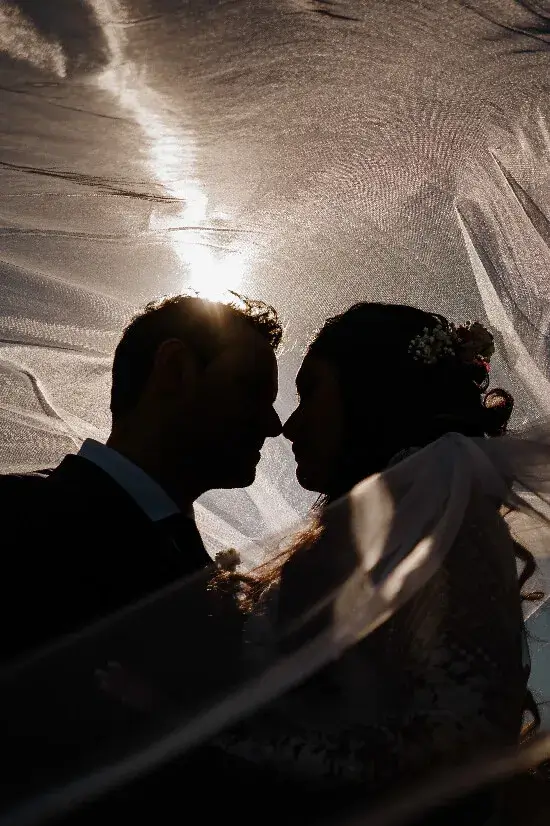
The darker portrait uses a different balance. A veil passes in front of the couple, and the wall behind them remains visible. The fabric becomes a layer between viewer and subject, rather than a bright prop isolated against an empty background.
Start by making a clean portrait without the veil. Then introduce a single layer and compare. Too many folds can obscure the expression or give the whole image a washed-out appearance. Move the fabric, the camera or the subject a little at a time so you can see which change is helping.
Check focus on the face at a useful magnification. A camera may prefer the contrast of lace or an embroidered edge in front of the person. If that happens, choose a more precise focus area on the face or use the focusing method you have tested for your camera. Recheck after either the subject or the veil moves.
3. Move closer and let the background disappear
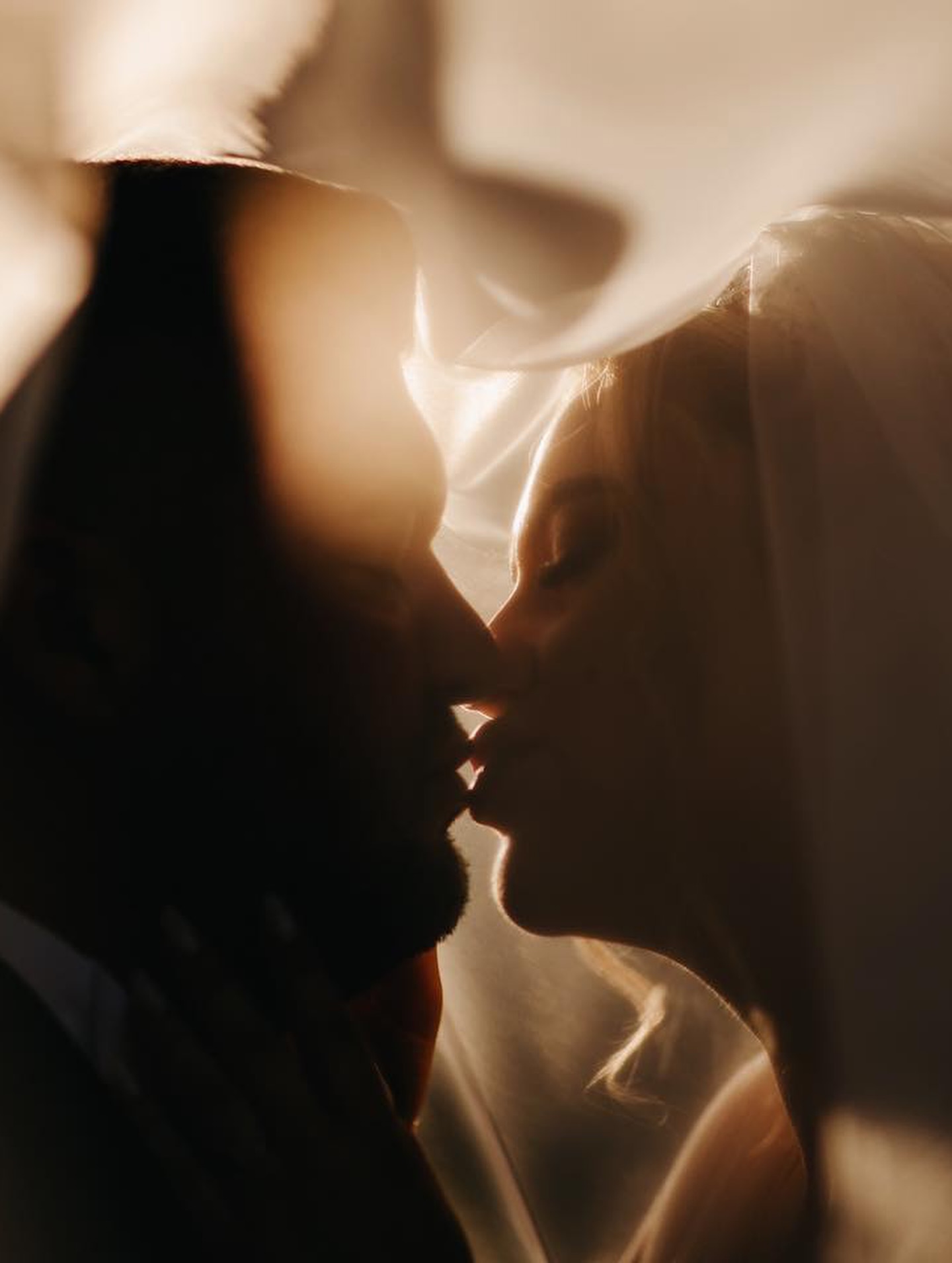
Sabina Mladin’s photograph fills the frame with two profiles beneath a veil. Warm light surrounds them, while the background offers very little information. The result is intimate because the picture gives the viewer almost nowhere else to look.
For a similar exercise, decide which facial edge must remain clear before adjusting the fabric. A small opening may be enough. Keep space around the couple and check that they are comfortable; the veil should feel light and easy to release. Move yourself to refine the background rather than repeatedly repositioning their faces.
Set exposure for the picture you want to keep
With bright fabric and darker faces, inspect both. Check your highlight warning or histogram alongside the image preview, and look for detail in the parts of the veil that matter to the composition. If the faces become too dark, change the angle to the light or add controlled fill when appropriate. A brighter exposure alone may lose the fabric’s texture.
Choose the aperture for the people you need sharp. Two faces at different distances may require more depth of field than a single face. Choose shutter speed for their movement and the movement of the fabric, then inspect a test frame. A stationary veil and a wind-blown one are different situations; there is no single setting that solves both.
For a documented example, Jide Alakija’s Nikon feature explains how he used light and checked eye focus in his own veil portraits. It is a useful reference for testing your result instead of assuming that a pleasing preview guarantees sharp eyelashes.
Finish with a short, readable sequence
Try three frames: a clean portrait, a layered version and a closer view. Keep the strongest of each only if it contributes something different. If the veil is the first thing you notice in every image, include a simpler photograph that brings attention back to the couple.
Our closer look at Sabina Mladin’s portraits explores that balance between a person and a visual effect. The aim is to give the portrait another possibility, not to make the fabric the main character.