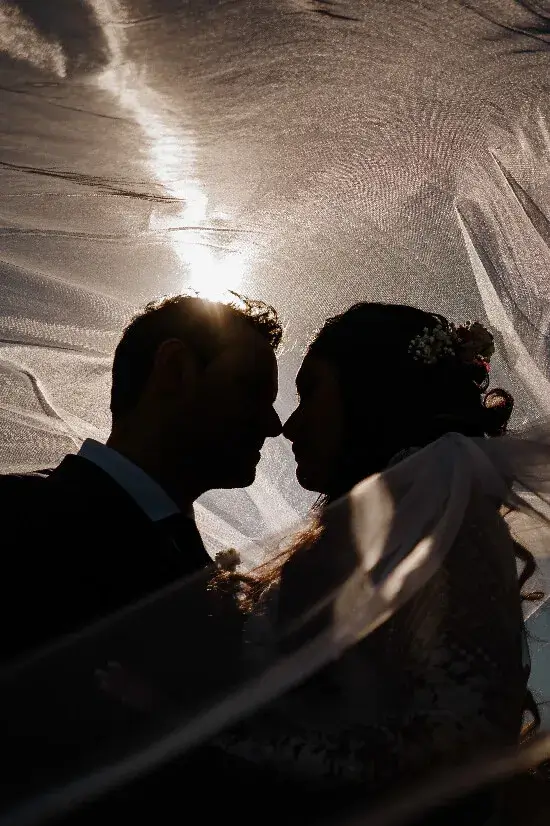
The kiss is over. Everyone lowers their camera. Then the couple turn towards their friends, someone starts laughing and the scene becomes a little less predictable. That is a good moment to stay ready.
Documentary wedding photography asks you to pay attention to what a celebration actually feels like. The challenge is to build clear, interesting photographs from events you cannot arrange. Here is a practical way to approach that work, from the conversation before the wedding to the final edit.
What a single frame can—and cannot—tell you
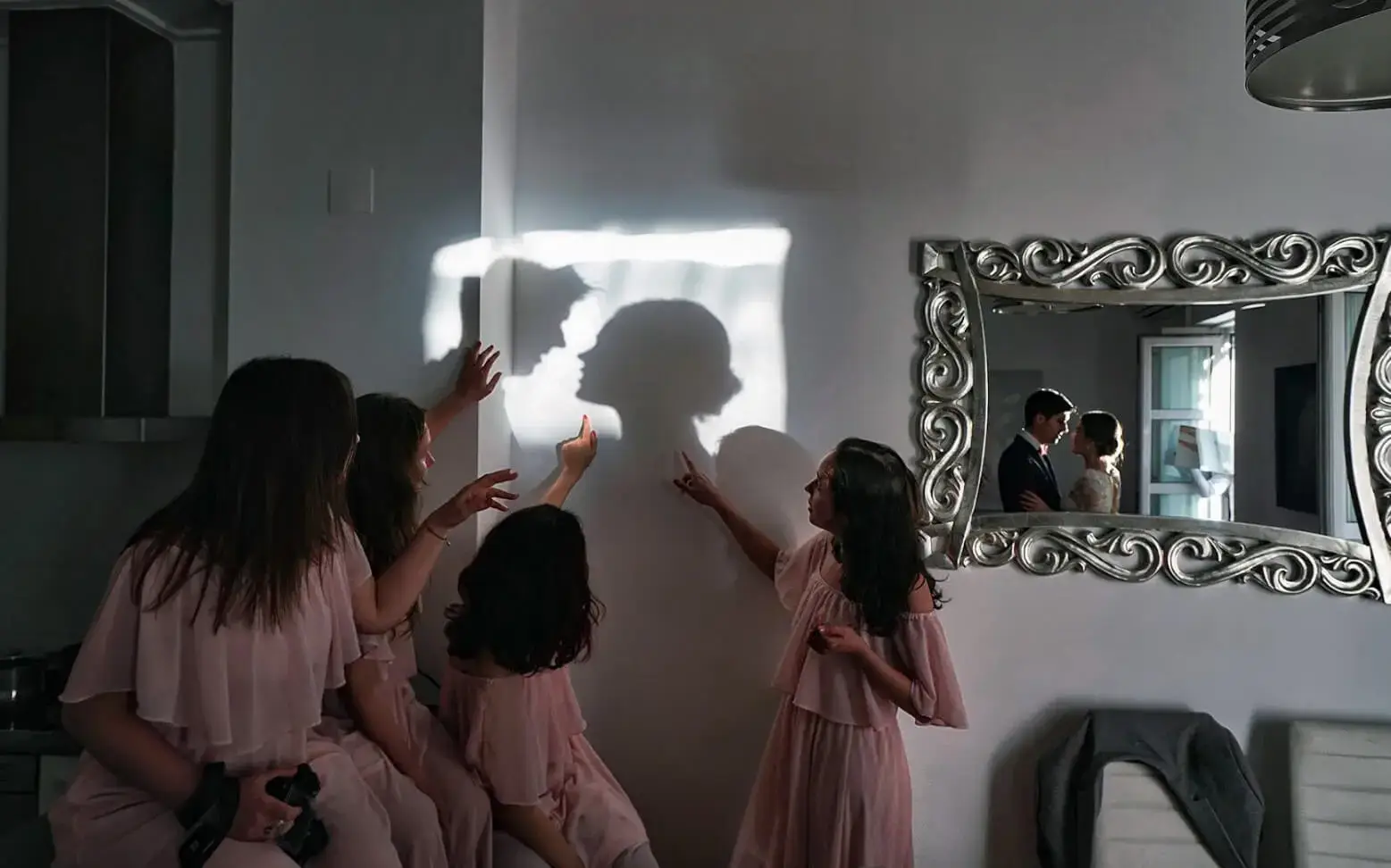
In the image above, gestures, shadows and a mirror connect different parts of the room. Study that visual layering, but keep it separate from a claim about how the picture happened. A single photograph does not establish whether the photographer gave direction. When presenting work as documentary, the process matters as well as the result.
Learn the relationships before you learn the shot list
A timeline tells you when the ceremony starts. It does not tell you which guest travelled across the world, who helped raise the bride or which friend will probably make the groom lose his composure.
Ask the couple who matters to them and what they are most looking forward to. Invite them to share any sensitive circumstances privately. Use that knowledge to recognise connections, while leaving room for people to surprise you. Avoid treating a family story as a promise that somebody will cry on cue.
Find a position that can hold a moment
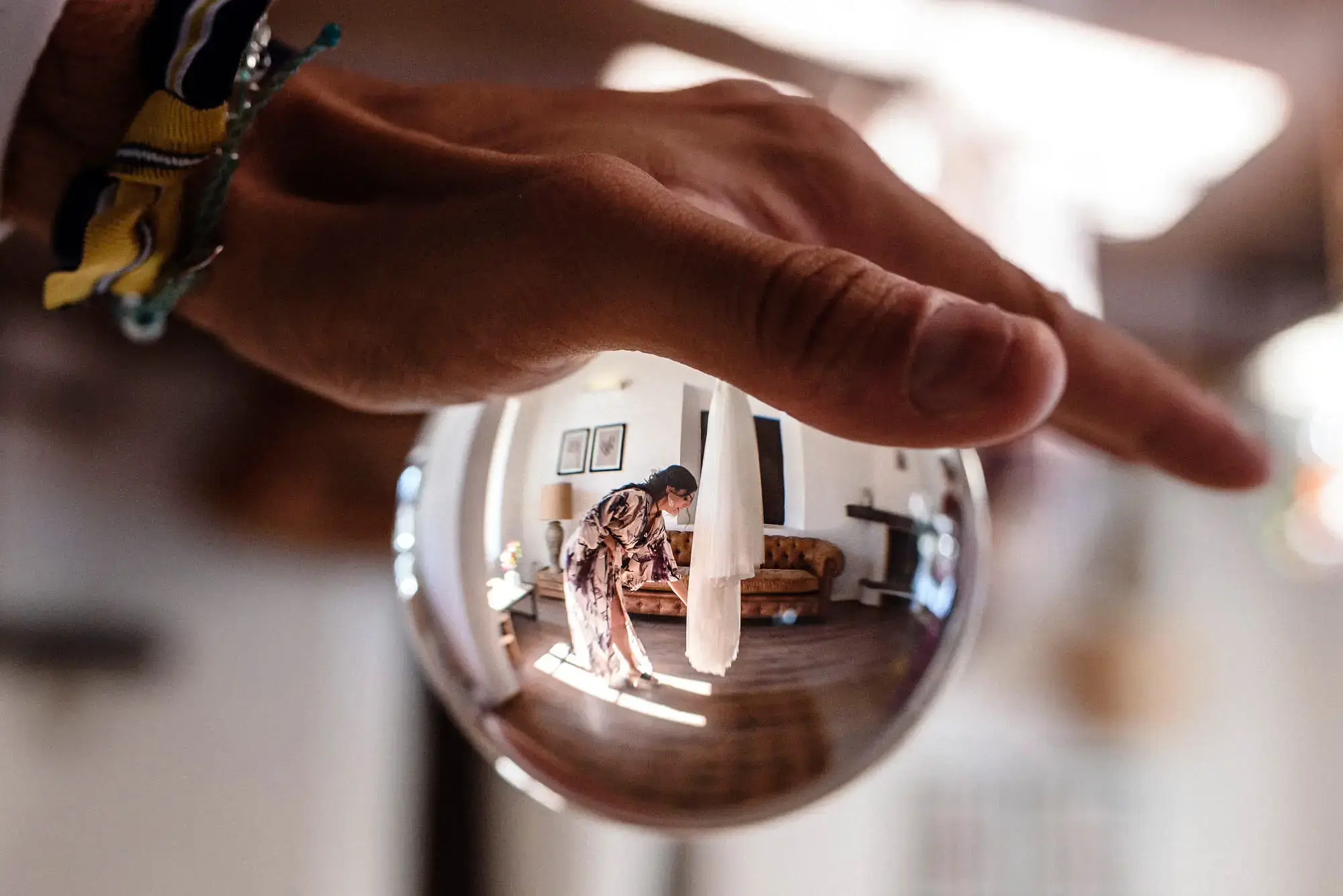
Before the action develops, inspect the frame. Is a bright doorway pulling attention from the faces? Is a chair cutting awkwardly across a hand? Can a small change in your own position simplify the scene without interrupting anyone?
Find a useful background and wait for human activity to give it meaning. During a speech, for example, a position that includes both the listener and a nearby relative may reveal a conversation between reactions. You do not need to squeeze every guest into the photograph. One readable relationship is often enough.
Work wide, medium and close—with a reason
A wide view can establish the room and the guests around a moment. A medium frame can show a gesture between people. A close detail can concentrate attention on something small that carries the story forward.
Use those distances as options, rather than a checklist to complete at every event. If moving would interrupt a ceremony or block a guest, keep the position you have. When the action is over, look for a quieter frame that gives the sequence space to breathe.
Prepare the exposure before the reaction arrives
Test your settings when you enter a new lighting situation. Check the brightest important detail, inspect a face and choose a shutter speed appropriate to the movement you expect. During fast action, a starting point such as 1/250 second may be useful, but faster movement can need more; a quieter moment may allow less. Check your actual frames instead of trusting a universal wedding preset.
Use an autofocus mode you have tested for the situation. In difficult light, take a moment to confirm that focus is landing where you expect. The aim is to leave more attention available for expressions, gestures and the edges of the frame.
If flash is permitted and needed, consider its effect on both the picture and the people nearby. Discuss venue restrictions in advance. During quiet parts of a ceremony, your position and behaviour matter as much as your exposure.
Stay with the scene after the obvious frame
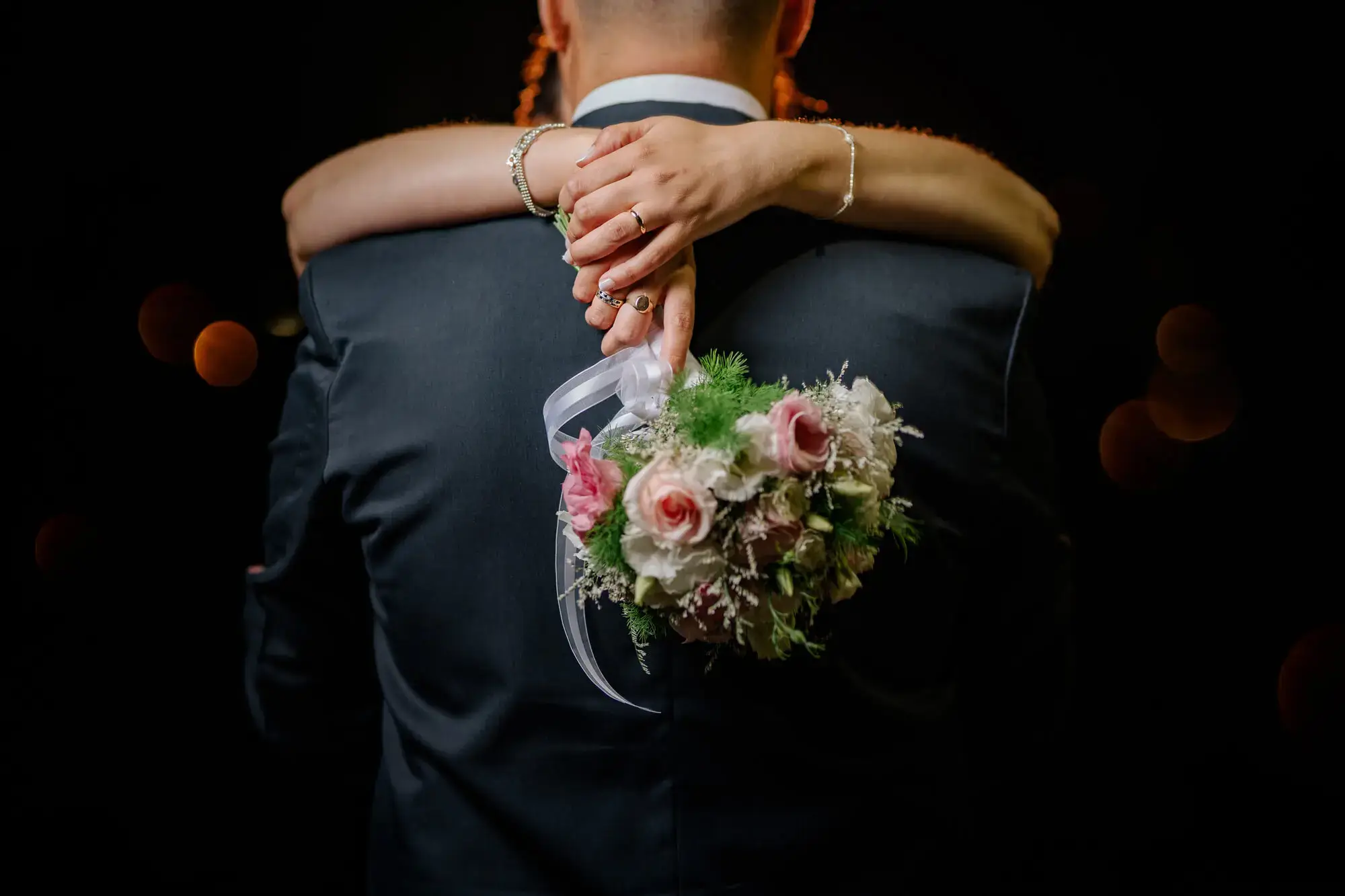
Photograph the embrace, then keep observing. The release of the hug, the glance towards another guest or the hand that stays on a shoulder can change the meaning of a sequence. Equally, know when to lower the camera. Access to a wedding does not make every vulnerable moment an invitation to photograph.
Let expressions happen. Asking someone to repeat a reaction creates a directed photograph; it should not later be presented as an untouched documentary moment. Portraits can be valuable in the same gallery when that distinction stays clear.
Edit for a story, not a wall of winners
Begin with a small sequence. Establish where we are, introduce the people, show a relationship or change and choose an ending. Two nearly identical laughs may compete with each other. One laugh followed by a quiet reaction may tell us more.
Keep colour and contrast coherent enough that the viewer can move through the gallery comfortably. Black and white can serve a frame, but it should not become a way to avoid examining distracting composition or missed focus. Our collection of black and white bridal portraits offers a separate look at how tonal choices direct attention.
A useful exercise for your next wedding
During a suitable, unhurried part of the day, make a five-image story about one interaction. Give it context, a central moment and an ending. Afterwards, remove one photograph. Does the sequence become clearer or does it lose something essential?
For further visual study, the Wedding Photojournalist Association separates documentary wedding work from its artistic portrait collections. Look at how an image communicates through expression, placement and timing. Then bring that attention back to the people in front of your own camera.